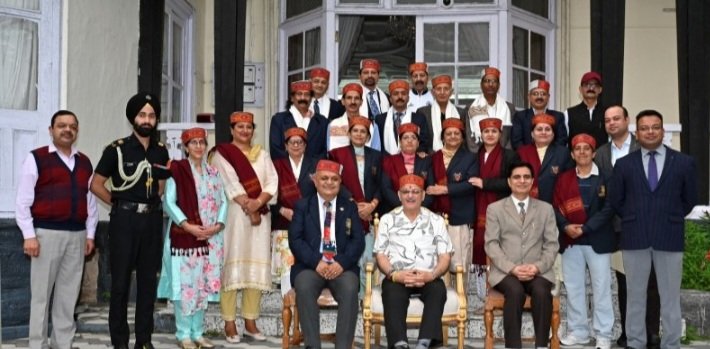
Shimla, August 29: Governor Kavinder Gupta’s first interaction with veteran sportspersons on National Sports Day has thrown up a question that Himachal Pradesh can no longer avoid: the State has no shortage of sporting talent, but does it have the sporting ecosystem to produce the next generation of champions?
The answer, going by the concerns raised by veterans themselves, is far from encouraging.
Veteran international and national players say that shortage of playgrounds, inadequate sporting infrastructure, weak training facilities and the under-utilisation of high-altitude centres continue to hold back sport in the State. Shimla, because of its terrain and severe shortage of open spaces, faces an even bigger crisis.
This is where the much-talked-about “catch them young” mantra needs to be tested against ground reality.
A child cannot be identified as sporting talent if there is no playground. Talent cannot be developed without a coach. And a promising athlete cannot compete nationally or internationally without sustained training, proper nutrition, equipment and exposure to competition.
Himachal has participated in national sports programmes and benefited from initiatives such as Khelo India and Fit India, but these programmes have yet to create a visible sporting culture across the State. Photo opportunities, felicitation ceremonies and occasional sporting events cannot replace a functioning grassroots system.
The irony is stark. Himachal produces athletes who make the State proud, but many of them emerge despite the system rather than because of it.
Even basic sporting nutrition remains a neglected issue. At many sporting events and training activities, athletes are still routinely offered the familiar samosa, pakora and boondi. Such fare may be part of the local food culture, but it hardly reflects the nutritional requirements of young athletes undergoing serious physical training.
If Himachal wants medals, it has to start talking about protein, recovery, fitness, sports science and qualified coaching—not merely trophies and applause.
The veterans’ suggestion to open school playgrounds for children after school hours is practical and could immediately expand access to playing fields. But it should be backed by trained coaches, equipment and a structured programme for identifying children with potential.
The State also needs to stop treating sports infrastructure as a construction exercise. Building a facility is only the beginning. A sports complex without coaches, equipment, regular competitions and athletes is little more than a concrete structure.
The same scrutiny must apply to high-altitude training facilities. Veterans have pointed to their under-utilisation. If Himachal possesses a natural advantage for endurance and high-altitude training, it should be converted into a specialised sporting asset rather than allowed to remain underused.
The Governor’s announcement of ₹1 lakh for sports equipment is a welcome gesture, but it is nowhere near the scale of the challenge. What Himachal needs is a long-term sports mission with measurable targets for playgrounds, coaches, academies, competitions, nutrition and talent identification.
The State has already demonstrated that its daughters can compete at the highest level, with sportspersons such as Sushma Verma, Harleen Deol and Renuka Singh Thakur becoming national names. The question is how many equally talented children never get the opportunity to reach that stage.
The veterans who have already walked that difficult road can become mentors. Their experience should not end with a meeting at Lok Bhavan.
They should be connected with schools, colleges, academies and rural sporting centres and made part of a formal grassroots mentoring programme.
The Governor has rightly called for taking sports beyond the major towns and connecting experienced players with young athletes. That should now translate into action on the ground.
For years, Himachal has celebrated the few who made it big. The real measure of its sporting policy will be whether it can identify hundreds of youngsters before their talent is lost to lack of facilities, coaching or opportunity.
Himachal does not need another generation of ceremonies celebrating champions. It needs grounds, coaches, nutrition, training and competitions that can create them.