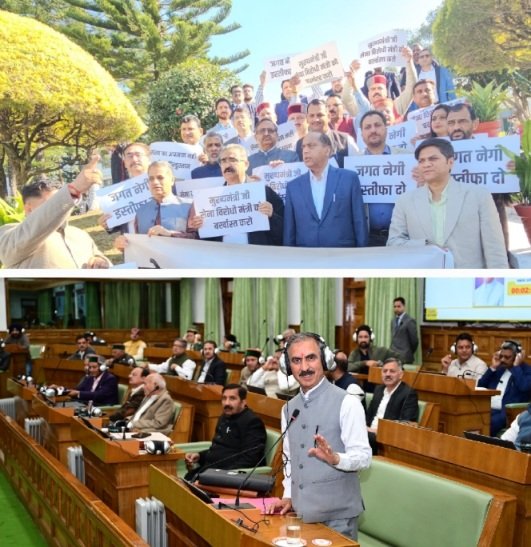

SHIMLA, November 21 — With barely a year left before the state slips into election mode, the Sukhvinder Singh Sukhu-led government on Saturday pushed through the Himachal Pradesh Investment Promotion and Facilitation (HPIPF) Bill, 2026, by voice vote in the Vidhan Sabha. While the administration is projecting the legislation as a bold blueprint to cut red tape and attract green industry, its eleventh-hour arrival—four years into a five-year mandate—looks less like a serious economic strategy and more like a desperate attempt to manufacture pre-poll optics.
Tabled by Industries Minister Harshwardhan Chauhan, the Bill promises an ambitious bureaucratic overhaul: a Chief Minister-headed Single Window Approval, Clearance, Reviewing and Monitoring Authority, a Combined Application Form on a unified digital portal, self-certification, risk-based inspections, and an automatic appeal mechanism for delayed clearances. It also talks of creating public-private land banks, green industrial corridors, and a high-powered committee to rationalise freight rates.
Yet, the fundamental question hanging over the legislation is simple: why now? Passing a sweeping statutory framework at the fag end of a regime leaves virtually no runway for actual implementation. Building land banks, operationalising digital portals, and setting up multi-departmental facilitation cells are multi-year exercises—not tasks that can be meaningfully executed months before the Model Code of Conduct brings governance to a standstill.
A Track Record That Undercuts the Rhetoric
The government’s sudden legislative urgency sits uneasily alongside its sluggish industrial execution over the past four years. Industry observers point out that investors in Himachal Pradesh have rarely been deterred by the lack of a law on paper; they have been driven away by high power tariffs, chronic logistical bottlenecks, rigid land-use hurdles, and unresolved friction with local transport unions.
By promising a high-powered panel involving the government, industry, and registered transport operators to fix freight rates, the Bill merely acknowledges a decades-old problem that the current administration has failed to tame in key hubs like Baddi-Barotiwala-Nalagarh. Similarly, introducing penal provisions for officers who delay approvals begs the question of why administrative accountability was not enforced during the regime’s prime years.
Putting the Cart Before the Horse
Adding to the skepticism is the sequence of policymaking. Industries Minister Chauhan noted that the Bill will provide the legal framework for Himachal Pradesh’s upcoming Industrial Policy. Critics argue that pushing through a complex facilitation law before even unveiling the core Industrial Policy puts the cart before the horse, leaving investors with procedural promises stripped of concrete fiscal or sectoral incentives.
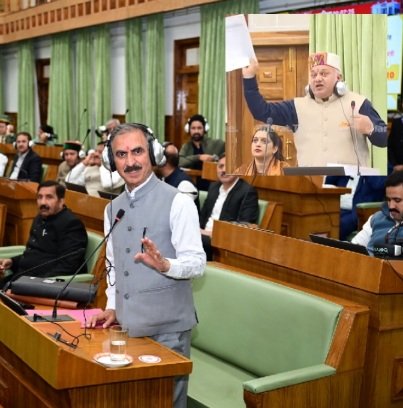
In his remarks following the Bill’s passage, Chief Minister Sukhu asserted that the legislation would replace procedural complexity with time-bound facilitation and generate quality employment for Himachali youth. Chauhan, meanwhile, touted provisions like auto-renewal, perpetual validity of notified approvals, and easier exit procedures as game-changers for ease of doing business.
For struggling entrepreneurs and unemployed youth in the state, however, grand statutory promises at the twilight of a government’s tenure ring hollow. Without time left on the clock to translate rules into factories on the ground, the HPIPF Bill, 2026 risks remaining a paper tiger—crafted more for election manifestos than actual industrial revival.