Kathmandu/Trishuli:
Nepal has intensified its race against time to rescue people feared trapped inside the tunnel of the Trishuli 3A hydropower project, with India joining the operation as the devastating floods and landslides along the Nepal–Tibet border continue to hamper access to affected areas.
For the past two days, Nepalese security forces have been working to open the tunnel entrance after reports that workers were trapped inside.
The operation gained momentum on Saturday morning as rescuers deployed drilling and excavation equipment to remove debris and rubble blocking the entrance.
A joint force of 82 personnel—62 from the Nepali Army and 20 from the Armed Police Force Nepal and Nepal Police—is continuously engaged in the search and excavation operation.
Difficult weather, unstable terrain and the quantity of debris have made the operation particularly challenging.
An 11-member Indian rescue team comprising medical personnel and tunnel-rescue specialists has reached Nepal following Kathmandu's request for assistance.
The team has reached Trishuli and conducted an initial helicopter reconnaissance of the Chilime and Langtang areas before joining the wider rescue effort.
The Indian assistance comes as Nepal has opened its disaster-response effort to international technical support. India has also been involved in evacuating and assisting its nationals affected by the catastrophe.
Nepal Home Minister Sudan Gurung visited the Upper Trishuli 3A hydropower project site and reviewed the rescue operation as security personnel continued working to reach those inside the tunnel.
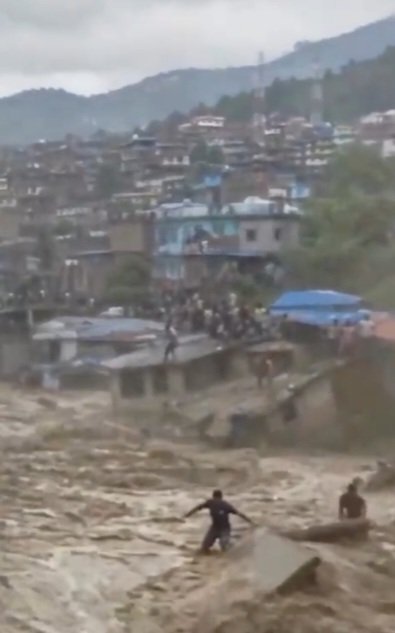
The tunnel rescue is among the most difficult operations following the flash floods that swept through the border region, destroying roads, bridges, power infrastructure and settlements.
More than 3,700 people have already been rescued across affected parts of Nepal, while thousands remain unaccounted for, according to the latest reports.
The humanitarian operation is also being complicated by damaged communications and roads. Helicopters have become critical to evacuating stranded people, carrying relief supplies and moving rescue personnel into areas cut off by landslides and washed-out roads.
The Nepal government has also opened the Prime Minister's Relief Fund to receive contributions from individuals and organisations for relief and recovery operations.
The crisis has also produced a grim search for missing victims. At Galchi in Dhading, police have appealed for help identifying the body of an unidentified woman recovered from the flood-affected area.
She has “Gopal” tattooed on her right hand, was wearing black size-38 Trekking Gold Star shoes and had a yellow bangle on her wrist. Authorities have asked anyone who recognises these identifying features to contact the Galchi Dhading Police Post.
The rescue operation at Trishuli now carries an added urgency as weather conditions remain uncertain and the possibility of further flooding and landslides continues to threaten rescue teams.
For Nepal, the immediate objective is simple: reach the trapped workers, evacuate survivors, identify the dead and get relief to communities cut off by the disaster.
The presence of Indian specialists alongside Nepal's Army, police and emergency personnel has turned the Trishuli operation into a joint effort in which every hour could make the difference between rescue and recovery.