India’s Polluted River Crisis Deepens. Gujarat Tops List of Critical Stretches.
New Delhi. India’s rivers continue to gasp for breath.
Fresh data placed in Lok Sabha shows a troubling picture of pollution across major river systems.
The Central Pollution Control Board has identified seven critically polluted river stretches this year.
Four of these are in Gujarat. Two in Maharashtra.One in Assam.
All recording Biochemical Oxygen Demand levels above 30 mg per litre.
This means dangerously low oxygen in the river water spelling doom for river life.
The government reply does not name the rivers. But the trend is unmistakable.
The Gujarat model may have delivered industrial growth. But it has clearly not worked for the rivers.
The state that prides itself on development now leads in toxic water stretches.
India has wrestled with polluted rivers for years. Silver lining is that number is decreasing.
In 2018, the country had 351 polluted stretches. That number stands at 296 in 2025.
A reduction, yes. But still a massive national water crisis. Critically polluted stretches have fallen from 45 to 37.
Yet they continue to choke under industrial and domestic discharge.
CPCB says 149 stretches have been delisted. Seventy one have shown improvement.
But heavily industrialised belts remain stubbornly polluted.
Grossly Polluting Industries add to the burden. India has 4493 such industries.
Out of these, 3633 are operational. 860 have closed on their own.
Among the running units, 3031 comply with environmental norms.
But 572 have been served show-cause notices.
Twenty nine have been ordered to shut. One has been directed to comply immediately.
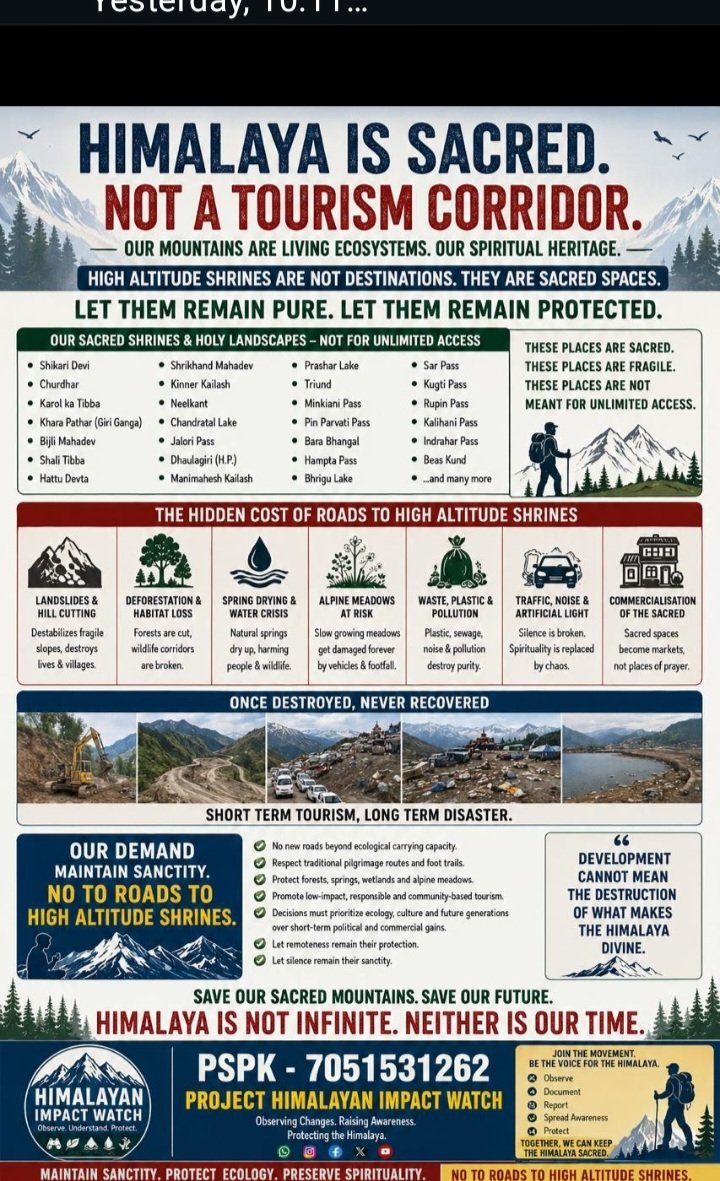
Luckily, the Himalayan rivers remain outside this polluted category.
Rivers like the Satluj, Beas, Ravi, Ganga and Yamuna do not figure in the critically polluted list.
None of the polluted stretches identified this year lie in the Himalayan region.
This is because the mountain states have no major industrial towns along their riverbanks.
The upper reaches remain protected due to low population pressure, cleaner catchments and minimal industrial activity.
The Himalayas today stand as the last refuge of India’s unpolluted river systems.
The government says it is improving sewage treatment. It is strengthening monitoring. And tightening controls during massive gatherings like the Kumbh Mela.
But the condition of rivers tells another story. The data lays the truth bare.
Industrial states carry the highest toxic load. India’s rivers sustain its economy.
Yet the same rivers are being sacrificed silently. The crisis runs deep. More stringent measures are needed to keep our arteries clear.
#PollutedRivers
#RiverCrisisIndia
#GangaBasin
#HimalayanRiversClean
#GujaratModelQuestioned
#CleanWaterNow