SHIMLA: Now or Never — Virasat for Vikas, Heritage-Based Growth
By Capt Ved P Sud | Convenor, Shimla Decongestion & Beautification Group | Member & Co-Convener, INTACH-Shimla
Shimla, once the beloved Queen of Hills, is at a critical tipping point.
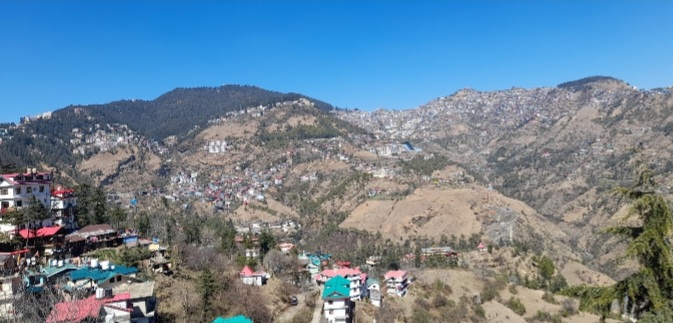
What began as a forested ridge in the Shivaliks — rich in natural beauty and colonial heritage — is now struggling to breathe under mounting pressures of unplanned urban growth, decaying infrastructure, and disappearing green cover.
The need of the hour is a well-thought-out Master Development Plan — not for the next five years, but for the next five decades.
The future of Shimla must be built on the principle of “maximum benefit, minimum loss”.
A sustainable, inclusive, and heritage-rooted development model is the only path forward.
A City with a Glorious Past
Simla, as it was called during the British Raj, emerged from a sleepy Himalayan hamlet into the Summer Capital of India.
It was known for its salubrious climate, colonial charm, and thoughtfully built urban design over seven iconic hills — Jakhu, Elysium, Bantony, Inverarm, Observatory, Prospect, and Summer Hill. The looped walkways, forested ridges, and quaint streets defined its identity.
The town grew around the Ridge — once held together by forest roots and natural springs — now known as the heart of Shimla.
Temples like the Ram Mandir at the base of Jakhu, built by Sud families from Kangra, became community anchors.
Over time, Simla became a symbol of organized urban forest living.
Its Mall Road and Cart Road served both walkers and carts in harmony, while its economy thrived on hill produce, crafts, and tourism.
From Order to Overload
Post-independence, with the colonial order gone, the decline began. Buildings came up indiscriminately.
Green belts vanished. Forests became concrete clusters.
The city that once supported 25,000 people now hosts over ten times that number — with almost no proportional increase in infrastructure.
Today’s Shimla is spread over 55 sq km, but its civic amenities — sewage, water, power, garbage management — remain stuck in a bygone era.
Squatters and encroachments have taken over vulnerable slopes. Roads built for walking are choked with vehicles.
The famed Ridge, the city’s cultural and structural backbone, is literally sinking under pressure.
The Present Crisis
What Shimla faces now is an existential crisis. Among its many challenges:
1. Chronic traffic jams and unregulated vehicle movement
2. Encroachment, unauthorized construction, and haphazard growth
3. Unplanned squatter settlements and slums
4. Poor civic amenities — toilets, night shelters, water, and power
5. Noise, air, and water pollution
6. Menace of stray dogs and monkeys
7. Disappearing green belts and degradation of urban forest
8. Garbage mismanagement
9. Erosion of cultural and architectural heritage
10. Weak disaster resilience — frequent landslides, sinking zones, and fire safety lapses
The Ridge — once an open lung — is a textbook case of civic neglect. After a fatal landslide in 2008 near the Tibetan Market, authorities carried out cosmetic repairs, but no long-term solution was pursued.
The same slope that once held community halls and vibrant local markets is now a cracked, shrinking lane.
Public institutions like the Municipal Corporation, expected to lead, remained silent spectators or passed the buck.
Virasat for Vikas: The Way Forward
Shimla must embrace heritage-based growth — one that respects its ecology, architecture, and people.
This vision needs to be renewable, inclusive, and rooted in local strengths and knowledge systems.
It is time to rezone Shimla into seven planning zones based on its original geography — Central, Bharari, Dhalli/Sanjauli, Kasumpti/Chhota Shimla, Tutikandi, Summer Hill, and Totu.
The 25 municipal wards can be broken into five clusters for focused, integrated development. Issues like erosion, sun-shade collapse, sinking soil, and unsafe buildings need special attention in each zone.
Tourism must be reimagined. Rather than turning Shimla into another overbuilt hill town, its heritage sites, loop walks, gardens, urban forests, and crafts must become Centres of Excellence — clean, curated, and culture-rich.
There is also a dire need to create new infrastructure: proper toilets, shelters, pedestrian corridors, solid waste systems, parking, and monkey-dog management zones.
A creative proposal could be to develop the urban forest north of Auckland Tunnel as a managed monkey-dog eco-habitat — similar to what one sees on Animal Planet — involving SPCA and tourism departments.
People's Participation is the Key
No urban development plan can succeed without the participation of those it impacts.
Citizens of Shimla must be involved not just as stakeholders, but as co-owners of the planning process.
Their feedback, experience, and expectations must be factored in from the start.
Suggestions must be invited from residents, NGOs, experts, environmentalists, and local bodies.
Only a collaborative, consultative process will ensure community buy-in and long-term success.
Urgency Like Never Before
Over the past decade, news headlines have sounded the alarm: “Shimla is Sinking,” “Ridge Slips Again,” “Axe on Green Belts,” “Can Shimla Be Saved?”
The answers don’t lie in panic or patchwork — but in an integrated, honest and sustained effort.
Builders, bureaucrats, and political interests have often bent the rules for short-term gain.
But what Shimla needs now is clear accountability and a strong political will to say:
“Enough is enough.” Shimla cannot be left to collapse under its own weight.
The time has come to treat this city not just as a tourist spot or administrative hub, but as a living heritage that sustains thousands of livelihoods, defines regional identity, and holds immense historical value.
To revive Shimla, the civic systems must be overhauled, green belts saved, core areas beautified, and the city made walkable and breathable again.
But most of all, Shimla needs a vision — bold, people-centric, and rooted in its heritage.
The Queen of Hills is crying for care. Her foundations are shaking, her forests thinning, her people waiting. This is not just about saving a city — it’s about reclaiming a legacy.
It’s now or never.