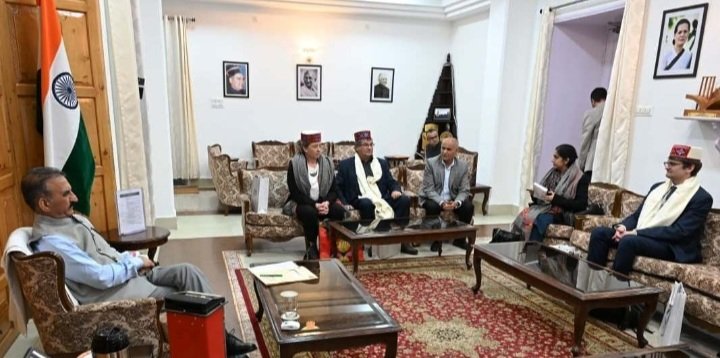
Shimla: The Himachal Pradesh government’s meeting with a high-level New Zealand delegation has raised questions in the state’s apple belt after key grower representatives and several political stakeholders from major apple-producing areas were left out of the engagement.
The meeting, led by Chief Minister Thakur Sukhvinder Singh Sukhu, focused on a proposed Apple Horticulture Centre of Excellence, technical cooperation, natural farming and exchange visits.
New Zealand High Commissioner Patrick Rata, Special Agricultural Trade Envoy Nathan Guy and representatives of New Zealand Apples and Pears attended the discussions.
The composition of the meeting, however, has drawn attention in Himachal’s apple-growing regions. Horticulture Minister Jagat Singh Negi, Education Minister Rohit Thakur, who represents Jubbal-Kotkhai, and Rohru MLA Mohan Lal Brakta were not part of the delegation-level discussions, despite their constituencies being closely linked to the state’s apple economy.
The exclusion of apple growers’ organisations is particularly significant as orchardists have been raising concerns over the proposed India-New Zealand Free Trade Agreement and its possible impact on domestic apple prices.
Growers’ groups have repeatedly sought safeguards against any tariff concessions that could increase imports during the domestic harvesting season.
The FTA issue assumes greater importance because Himachal’s apple harvest overlaps with the period when imported apples could enter Indian markets in significant quantities.
Growers fear that increased availability of imported fruit during the peak season could put pressure on wholesale prices, particularly affecting small and marginal orchardists.
The Centre has maintained that protective mechanisms, including a Minimum Import Price, can safeguard sensitive agricultural sectors in trade agreements.
However, growers in Himachal have been seeking clearer assurances on import volumes, tariff protection and the timing of foreign apple shipments.
The state government’s official account of Thursday’s meeting made no reference to these contentious trade concerns.
The release instead highlighted cooperation in horticultural technology, natural farming, capacity building and institutional exchanges with New Zealand.
The silence on the FTA has become the most conspicuous aspect of the engagement because New Zealand is a major apple-producing country and the proposed trade arrangement directly concerns a commodity central to Himachal’s rural economy.
The absence of representatives from the growers’ community also leaves unanswered questions about whether the proposed Centre of Excellence and other international collaborations will be aligned with the immediate concerns of local orchardists.
Technology transfer may offer long-term benefits, but growers are simultaneously seeking protection from short-term market disruptions.
With production costs rising and weather-related losses adding to the pressure on orchardists, the apple sector is already facing multiple challenges.
The latest engagement with New Zealand has therefore revived the demand for the state government to bring growers and representatives from the core apple belt directly into discussions on any trade arrangement that could affect their market.
The meeting may have opened a new channel for technical cooperation with New Zealand, but the conspicuous absence of the people most exposed to the consequences of apple trade has left the state’s orchardists asking whether international cooperation is being discussed without adequately addressing their immediate market concerns.
#HimachalPradesh #AppleGrowers #NewZealandFTA #Horticulture