World Environment Day: "The Himalayas Are Breaking Before Our Eyes" — PSPK Appeal for Mountain Protection
SHIMLA: On the occasion of World Environment Day, Pahari Samaj Paryavaran Kwach (PSPK) led by its CEO Maj Gen Atul Kaushik released a video message, calling for urgent action to protect the fragile Himalayan ecosystem from what PSPK described as "reckless and ecologically blind development."
Speaking as an environmental activist and a deeply concerned citizen, Maj Gen Atul Kaushik shared the video with HimbuMail.
The message was not merely about environmentalism but about the very survival of India's mountain regions stretching from Kashmir to Arunachal Pradesh.
"Today, I speak not only as an environmental activist but as a worried citizen watching our Himalayas slowly break under the weight of unplanned and unsustainable development," he said in the video.
He warned that mountain ecosystems across the Indian Himalayas are facing unprecedented pressure from indiscriminate road cutting, unscientific construction, uncontrolled tourism, large hydropower projects, deforestation, and rampant exploitation of natural resources.
"From UP hill districts to Uttarakhand, from Kashmir and Himachal to Arunachal Pradesh, the ecological burden on our mountains is increasing every year. Forests are disappearing, slopes are collapsing, rivers and springs are shrinking, and fragile ecosystems are being torn apart in the name of progress," the video stated.
The organization argued that for decades development has been measured primarily through the construction of roads, tunnels, concrete structures and rising tourist numbers while environmental sustainability and ecological limits have been largely ignored.
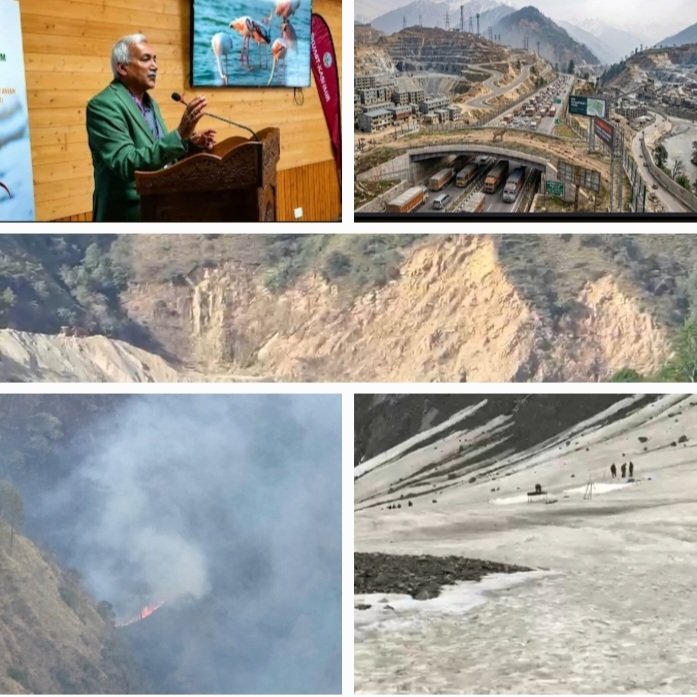
According to PSPK, nature is now delivering a clear warning through recurring disasters. Massive landslides, flash floods, cloudbursts, drying water sources, devastating forest fires and increasingly unstable mountain slopes are becoming common across the Himalayan belt.
"Nature's response always comes before ecological collapse. Unfortunately, we are witnessing that response in every monsoon season," Maj Gen Kaushik remarked.
The video stressed that PSPK is not opposed to development. Connectivity, roads, healthcare access, education and economic opportunities are essential for mountain communities. However, the organization emphasized that development without ecological wisdom can quickly become a recipe for destruction.
"Development is necessary. Connectivity is important. But development without environmental understanding is not progress; it is destruction," he asserted.
Particular concern was expressed over large-scale hill cutting for highways and infrastructure projects. The organization said that many mountain slopes that remained stable for centuries are being weakened within a matter of years through excessive blasting and poorly planned engineering interventions.
PSPK also highlighted the impact of uncontrolled tourism, saying the rush to maximize tourist footfall has increased waste generation, pollution, traffic congestion, pressure on water resources and disturbance to fragile ecosystems.
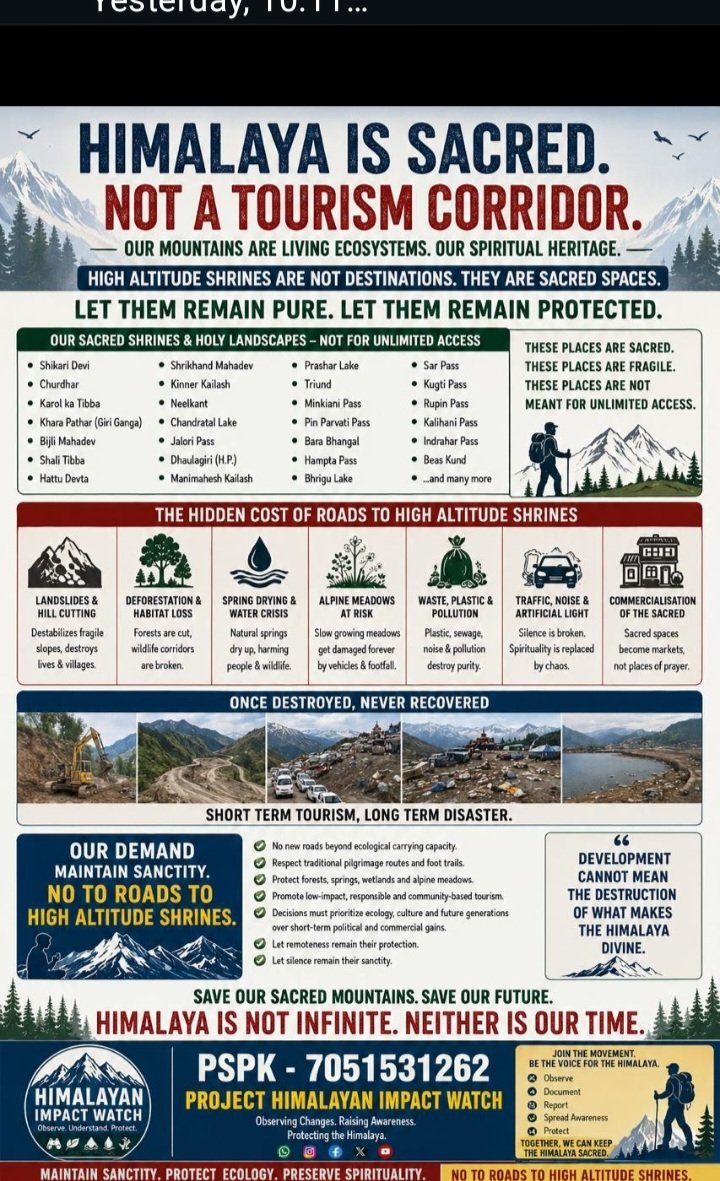
The video voiced concern over the changing character of mountain pilgrimage centres.
"Many sacred Himalayan shrines that people once reached through discipline, devotion and respect for nature are gradually turning into commercial tourism destinations. High-altitude temples and traditional pilgrimage routes were never meant to become entertainment hubs," PSPK CEO said.
Calling for a fundamental shift in thinking, PSPK urged policymakers to adopt a new mountain-centric development model based on ecological carrying capacity, environmental safeguards and local wisdom.
"The Himalayas are not empty land waiting to be exploited. They are living ecosystems, water towers of India, climate regulators, biodiversity reserves and repositories of spiritual heritage, traditional knowledge and cultural identity."
The video noted that for mountain communities, the Himalayas are not merely landscapes but the foundation of life, livelihoods, culture and dignity.
A major appeal was directed towards the youth of Himalayan states.
"Become guardians of your mountains. Protect your forests, rivers, traditional architecture, local culture, sacred sites and indigenous knowledge systems. Do not allow what generations preserved with faith and patience to be destroyed for a few years of commercial gain."
PSPK further stressed that the future of mountain societies cannot be built upon environmentally destructive growth models.
It called for policies that listen not only to contractors, politicians and corporations but also to scientists, environmental experts, local communities and future generations.
Maj Gen Atul Kaushik said that under its Project Himalayan Impact Watch, it aims to document ecological changes, monitor environmental degradation, create public awareness and encourage responsible, accountable and sustainable development across mountain regions.
As part of the campaign, PSPK has also circulated a Google Form seeking participation from citizens, researchers, students, environmentalists and mountain residents.
The organization urged people to join the initiative and contribute their observations and suggestions regarding ecological changes in the Himalayas.
Concluding the message, PSPK delivered an emotional reminder of humanity's responsibility towards the mountains.
"For centuries, the mountains have protected us. They have given us water, forests, climate security, culture and identity. If we fail to protect them today, future generations will inherit disasters instead of heritage. Now it is our turn to protect the mountains", Maj Gen Atul Kaushik said.
The video ends with a call for collective action and citizen participation, urging people across the Himalayan region to become active stakeholders in safeguarding one of the world's most fragile and vital mountain ecosystems.