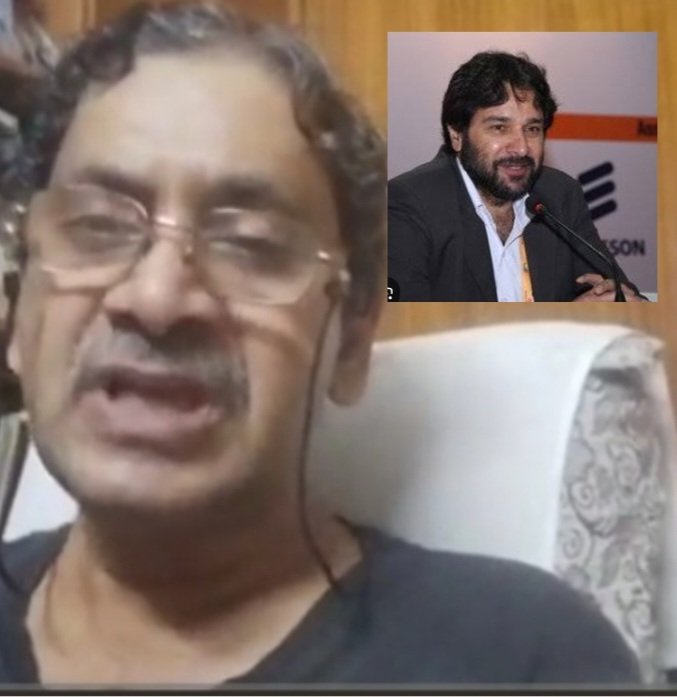
Shimla/New Delhi | July 29, 2025 — In a strong and urgent warning, leading climate expert Prof. Soumya Dutta has said that the ongoing cutting of apple trees in Himachal Pradesh is not just short-sighted — it’s an invitation to environmental disaster.
Speaking on the current controversy over the uprooting of apple orchards in hill areas in a video, Prof. Dutta, who is the Co-Convener of the South Asian People’s Action on Climate Crisis (SAPACC), said:
“These are not just fruit trees — they are part of a living ecological shield. You cut them now, and you expose the hills to erosion, landslides, and a massive climate blowback.”
He warned that cutting apple trees, especially during the monsoon season, destabilises fragile slopes and leads to what locals call "Euro and Meroshan" — terms for erosion and hill collapse.
“You are weakening the land at its most vulnerable time,” he said. “This is ecological mismanagement disguised as land control.”
Prof. Dutta pointed out that apple trees in Himachal are not wild or invasive — they are part of carefully cultivated agroforestry systems that provide livelihood, retain soil, help regulate water, and serve as buffers against extreme weather.
“It takes over 14 to 15 years for a new tree to match the ecological role of a mature apple tree,” he said.
“So when you cut them, you’re not just removing a tree — you’re stripping the land naked for the next decade and a half.”
He tied the issue directly to the climate crisis. “A one-degree rise in temperature leads to extreme weather — more intense rain, longer dry spells, unpredictable winters".
"In such a situation, you don’t cut trees. You grow more. This policy of removing orchards is a reckless move,” he said.
Backing this view, former Shimla Deputy Mayor Tikender Singh Panwar, who had earlier filed a PIL in the Supreme Court against the cutting of apple trees, said, “The hills cannot afford such environmental experiments".
"These trees are the only livelihood source for thousands. With no industry or alternate jobs in these regions, axing orchards hits both ecology and economy.”
The Supreme Court, acting on Panwar’s petition, had earlier stayed the Himachal High Court’s order that allowed tree felling on certain disputed lands. But as fresh cases of cutting emerge, environmentalists like Dutta are raising fresh alarms.
Prof. Dutta also questioned the forest department’s logic. “If your goal is to restore forests, agroforestry should be the model — not mass uprooting".
"Where’s the scientific planning? Where’s the ecological assessment?” he asked.
Prof. Dutta didn’t mince his words in his final warning: “This isn’t land recovery. This is eco-vandalism. You’re turning a climate buffer into a landslide-prone, jobless desert. Don’t invite disaster to your doorstep — stop cutting the apple trees now.”
With the Supreme Court already intervening, and with national climate voices now speaking up, the ball is back in the Himachal government’s court.
Will it continue down a slippery slope — or rethink before more trees fall?