Jaon(Kullu): Even before the official opening of the Srikhand Mahadev Yatra, reports of at least five deaths on the treacherous route have cast a shadow over one of the Himalayas' toughest pilgrimages.
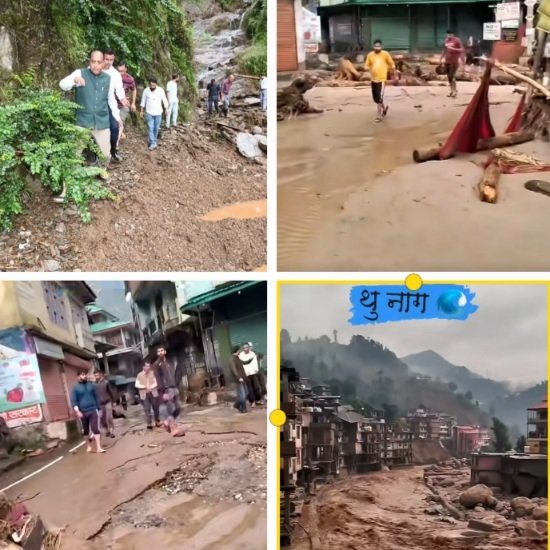
Yet hundreds of devotees continue to undertake the arduous 40-km trek, braving broken trails, unstable slopes, snowfields and falling rocks in pursuit of faith.
The deaths have been reported from the upper reaches of the pilgrimage route, although no official confirmation of the toll has been issued so far.
Information gathered from local residents, guides and returning pilgrims suggests that two devotees died after suffering medical emergencies and collapsing on the mountain, while three others reportedly succumbed to serious injuries caused by boulders crashing down from the crumbling slopes between Bhim Dwari and Parvati Bagh.
The reports come at a time when experts from the Atal Bihari Vajpayee Institute of Mountaineering and Allied Sports (ABVIMAS), Manali, have warned that the route remains highly hazardous.
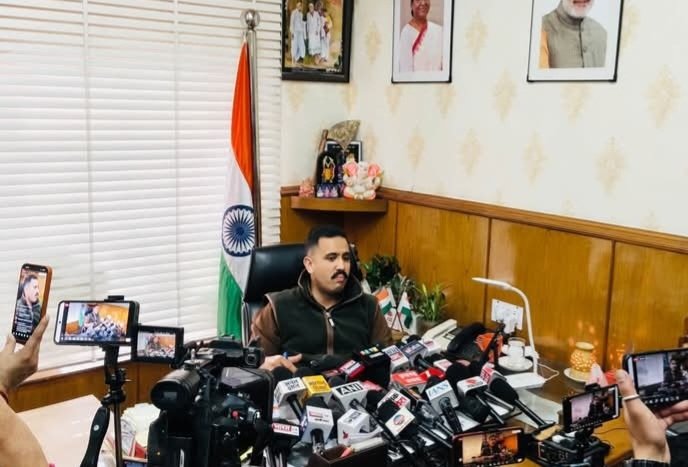
Their assessment, recently discussed in a meeting chaired by Kullu Deputy Commissioner Anurag Chander Sharma, found the stretch between Bhim Dwari and Parvati Bagh particularly vulnerable, with unstable terrain, loose rocks, flash-flood risks and extremely difficult rescue conditions in the event of an accident.
Despite these warnings, the pilgrimage is effectively underway.
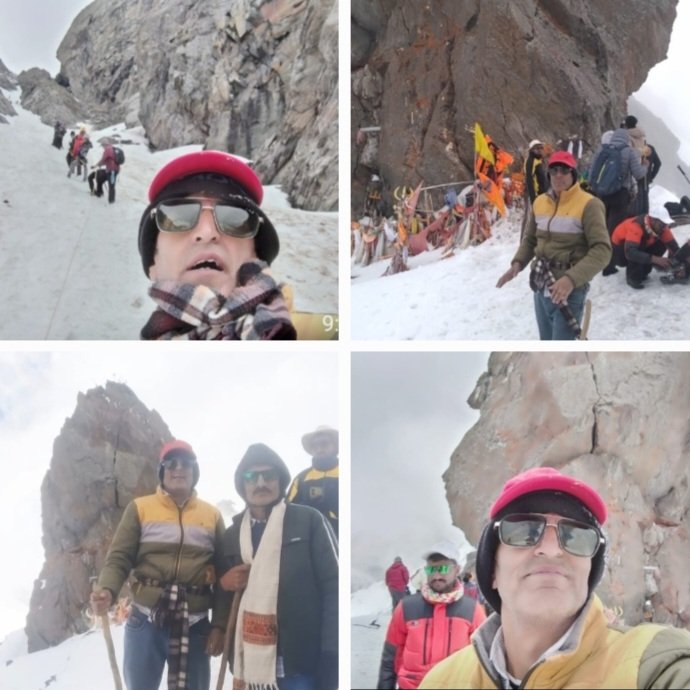
Among those who recently completed the trek were Deepak Kumar Banchta of Shantha in Chopal and Satish Chauhan of Kishore, Balson in Theog, who returned with chilling accounts of the dangers lurking on the route.
"We had to cross damaged stretches using ropes and walking sticks. In many places, the trail has been breached and narrowed dangerously," said Satish Chauhan.
Recalling a dramatic rescue, Satish said, "I was trekking through snow when a pilgrim below me suddenly slipped and rolled down the slope.
Thankfully, he got trapped behind a large boulder. Otherwise, he would have disappeared into the gorge. He was rescued and later paid around ₹11,000 to local guides to safely bring him down to Parvati Bagh. He was fortunate to survive."
They said they have visited Amarnath, Char Dham upto Gaumukh, Mani Mahesh, but they find Sri Khand route the toughest and hazardous of all.
Sharing their yatra experience with HimbuMail, Deepak and Satish said they were informed by local guides that two bodies had recently been brought down from the upper reaches to Jauni after pilgrims reportedly suffered fatal medical emergencies.
According to them, local guides claimed that retrieving bodies from the rugged terrain is an extremely difficult and dangerous task, with charges reportedly reaching ₹1 lakh per body due to the manpower and risks involved.
Deepak and Satish were also told about three other fatalities linked to rockfalls. Local residents alleged that the victims suffered severe injuries after being struck by boulders tumbling down from the steep mountain slopes that tower over sections of the route.
The dangers, however, have done little to deter devotees.
The two pilgrims said they encountered hundreds of people making their way towards the shrine. On June 21 alone, they estimated that nearly 100 devotees had reached the sacred Srikhand peak before commencing their descent.
"One has to leave the summit quickly," said Deepak. "After about 11.30 am, weather conditions can change in minutes. Snowfall can begin suddenly and strong winds sweep across the mountain. Staying there becomes extremely risky."
While authorities are yet to formally clear the pilgrimage, a bustling seasonal economy has already sprung up along the route.
For local residents, guides, porters and tent operators, the yatra provides a lucrative source of income during the short Himalayan summer.
Temporary camps, eateries and accommodation facilities have mushroomed at Jauni, Bhim Dwari, the second base camp and Parvati Bagh, catering to the steady flow of pilgrims.
Deepak and Satish said they paid around ₹1,200 per person for food and overnight stay in tents along the route. At Bhim Dwari, a simple half-plate of rice and dal was reportedly selling for ₹400, highlighting both the remoteness of the terrain and the high costs borne by pilgrims.
Locals, however, defend the prices, saying that every kilogram of food, fuel, bedding and construction material has to be transported over long distances and difficult terrain.
The growing activity along the route has raised questions about enforcement and accountability.
While the district administration continues to seek suggestions and examine the ABVIMAS report, the ground reality is that the pilgrimage is already taking place without formal approval, regulated safety measures or an officially declared rescue framework.
For mountain guides and villagers living along the route, the situation is becoming increasingly worrying.
They say faith is drawing people to the shrine, but the mountain itself is sending repeated warnings through landslides, rockfalls, extreme weather and now reports of multiple deaths.
As pilgrims continue their ascent towards the sacred abode of Lord Shiva, the shattered trails and unstable slopes of Srikhand Mahadev stand as a stark reminder that devotion may inspire the journey, but it cannot eliminate the dangers of one of the most unforgiving treks in the Himalayas.
With five lives reportedly already lost and the route officially deemed unsafe, the question echoing through the Srikhand mountains is whether tragedy will strike again before a final decision is taken on the future of this year's yatra.