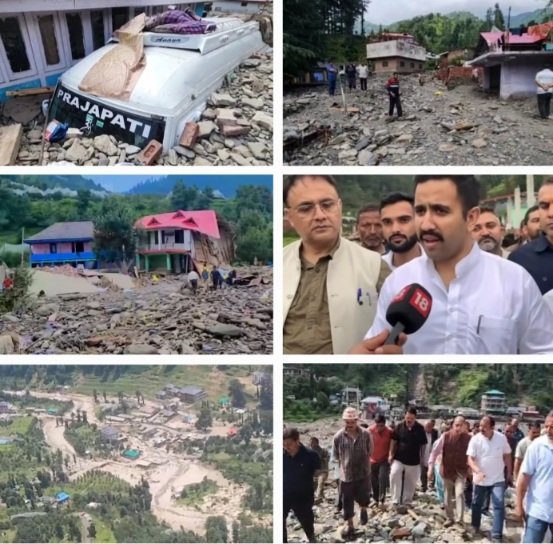
JANJHELI/THUNAG (Mandi), July 8 —
On June 30 night it wasn't just rain. It was rage. And this time, nature came back with a vengeance. But let’s be honest — we invited it.
Over 235 mm of rain lashed the Janjheli-Thunag belt in Mandi, Himachal Pradesh, and what followed was a trail of death, debris, and devastation.
Villagers say the small seasonal nallahs — those gentle little streams they grew up watching — turned into monstrous rivers that swallowed homes, orchards, fields, cattle sheds, and dreams.
At Pandushila, a sacred boulder tied to the Mahabharata legend, three people were swept away. Two are still missing. The river didn’t just pass by — it climbed up and drowned everything in its way.
“We’ve Never Seen This in over 100 Years”
Elders in the village, some in their late 80s and 90s, say even their forefathers never saw such flooding here.
“This wasn’t just a natural disaster — this was a man-made curse,” says Suresh Thakur, a resident of Janjheli, pointing towards the hills where contractors had dumped truckloads of muck straight into the khads.
The rain was heavy — yes. But it was the blocked natural drains, illegal construction and laying off jal Shakti water scheme from once undisturbed jungles on flood channels, and greed-fed road construction that turned it into a killer flood.
Homes Gone, Hope Shaky
In villages like Timro, Dharjor, Shadi, Sharan, Kutha and Bhinjarin, people are sleeping in makeshift camps — tents, tin sheds or panchayat ghar or schools, whatever they can find.
Children cry at night; elders sit silently, staring at the deluge scared wreckage where their homes once stood.
“We had apple orchards... 3,000 trees. They are all gone. Our polyhouses were swept clean, even the pipes are missing. How will we repay the bank now?” — ask local farmers.
Many had taken Kisan Credit Card (KCC) loans — and now they have no crop, no land, and no source of income left.
They’re demanding a loan waiver. “We’ll die before we pay this off,” says another.
Roads Snapped, Phones Dead, Power Out
Connectivity is a joke right now. The main Bagshiad-Thunag-Janjheli road has been damaged extensively.
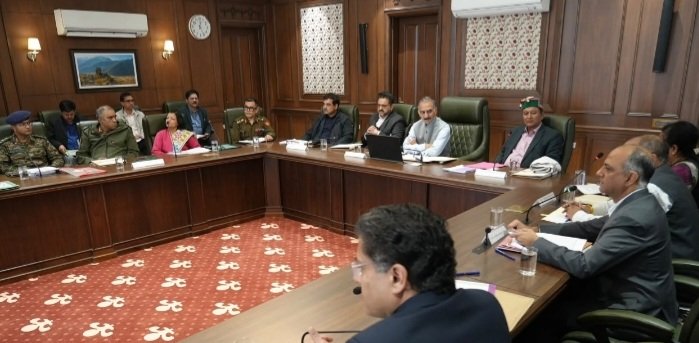
PWD Minister Vikramaditya Singh who is on ground zero told media that 100+ JCBs are working day and night to clear landslides and debris.
"We have no communication as to how many link roads are snapped, he added pointing the largescale damage done to the homes, crops, lands, roads and infrastructure.
There’s no electricity, no water, and only one mobile tower is working — and even that with a generator.
“We’re living in the Stone Age again,” says a schoolteacher. “But with plastic roofs and unpaid EMIs.”
Mountains of Muck, Rivers of Regret
The visuals are heartbreaking. Imagine schoolbags floating in the khads. Trunks of uprooted apple trees tossed like matchsticks. A four-storey building reduced to rubble near Pandavshila.
The shattered village women trying to pull out muddy clothes from what’s left of their homes- crying helplessly. They have no hope. The boulders and debris have buried their homes- number could be over 1000 homes and sheds and shops.
The nallahs — Baklikhad, Magdugaad, Kuthah Khad — changed course and direction overnight. People were left confused, scared, and completely exposed.
“These drains never had water. Today they became rivers,” says a local who lost both his cattle and his home.
“Contractors Made Crores, We Lost Centuries”
Locals blame unregulated road and infra construction. “Debris from road and building cutting was dumped straight into the water channels. When it rained, all that junk moved downstream like a bullet — smashing everything,” says a retired forest guard.
Contractors and babus made money. The poor paid the price.
Where Was the Government?
The NDRF teams did show up and did what they could.
SDM and local officials reached the worst-hit villages. But with roads snapped and bridges gone, they couldn’t do much for first four days after the manmade deluge.
Former CM and MLA Jai Ram Thakur flew in and surveyed the damage by helicopter and landed at helipad and walked through Kuthah, Janjehli and Thunag.
“This is the worst I’ve seen in 28 years,” he said, requesting the state to declare it a special disaster zone.
But on the ground as of now, people want food, medicine, relief, drinking water — and answers.
Now the Clock Ticks on Winter
The rains aren’t over, and winter isn’t far. People who lost their homes will have nowhere to go once the temperature drops.
There’s an urgent need for rehabilitation, resettlement, and real accountability.
This isn't not only a story of nature and weather gone wild. This is also a story of man gone blind.
“Greedy contracters dug roads, jal Shakti pipelines, choked natural drains, built homes where water flows — and now we cry ‘natural disaster’. Truth is, the hills are tired. They’re showing us the mirror.”
#JanjheliFloods #ManMadeDisaster #HimachalToll #NatureStrikesBack
For more on the ground coverage: www.himbumail.com