
SHIMLA’S HILLS BLEED AS ₹1,400-CR ROPEWAY PROJECT MOVES AHEAD — over 860 TREES TO FALL, NALAS CHOKED, SLOPES DYING
Shimla: The long-delayed ₹1,400-crore ropeway project has finally stepped out of the files. But as the government celebrates its “big push for mobility”, Shimla is staring at a green tragedy.
Over 860 trees — mostly mature Deodars — are set to be axed for the project.
The Forest Department confirms that Stage-I clearance has been granted. The enumeration of trees is complete. Stage-II approval from MoEFCC is expected soon.
But what residents see on the ground is much worse — a city whose hills are being crushed from all sides, slowly but brutally.
On the lower margins of the eastern and southern slopes, where the Delhi–Pujarli–Kaithlighat stretch of the Fourlane project is coming up, the destruction is now in plain sight.
Dumping is rampant. Oak saplings lie buried under layers of fresh muck. Water channels have disappeared under debris.
“The Nalas are gone. The young trees are gone. What forest will survive here?” asked Kishori Lal of Pujarli, pointing at a fresh debris slide.
On the northern and north-western extremity, which drains into the Satluj basin, the scene is grim.
Roads were cut from Dudli and Pawavo uphill and downhill to the new sites. Private construction is on. Every Nala is clogged with dumped soil. Tree roots are suffocating under layers of debris.
“The whole hillside looks wounded. No agency is even pretending to care,” said a shopkeeper in Dhalli, shaking his head at a flattened forest patch.
A CITY WITH 42% FOREST COVER… NOW FIGHTING FOR ITS TREES
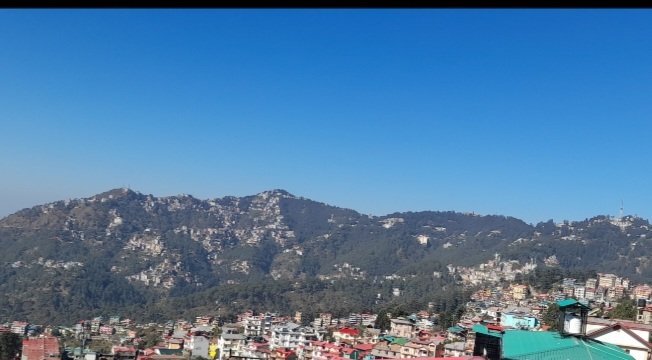
Shimla is officially the only Indian city with 42% forest cover.
But on the ground, the trees are dying — silently.
From Jakhu to Lakkar Bazaar, long-pending rows of concrete steps, parking structures, retaining walls and hill cuts have choked root systems.
Many uprooted trees lie scattered between Forest Colony and New Shimla alone, never salvaged, never cleared.
On the Shimla bypass, debris from each landslide is pushed straight into Nalas.
The BCS seasonal Nala is now a dumping trench.
“Seeing is believing. These are dead forests now,” said Rajiv Chauhan of Dhalli, pointing to a gully packed with construction muck.
65 NALAS TURNED INTO DUMPING PITS
Shimla’s natural drainage network — 65 Nalas — has collapsed.
PWD and contract agencies dump debris freely.
Forest officials look the other way.
The IGMC parking alone has buried an entire Nala and wiped out mature oak trees.
The northern face of the Ridge — reinforced on IIT Roorkee’s recommendation — looks stripped and tense.
NALDEHRA: ANOTHER BARREN HILL, ANOTHER MISSED OPPORTUNITY
Move toward Mishobra and Naldehra, and the hills tell another sad story.
Massive private constructions have ripped the slopes apart.
Debris and sewage are flowing into lower villages.
The Enforcement Directorate is investigating one big builder, but the destruction continues.
Ironically, these bare slopes — ideal for compensatory afforestation — remain ignored.
THE BIG QUESTION: WHY AFFOREST IN ANI WHEN SHIMLA IS DYING?
Under MoEF rules, compensatory afforestation (CA) is mandatory.
Yet the Forest Department has chosen Anni for planting new saplings, dozens of kilometres away claiming Shimla has no land for afforestation.
Residents are questioning: “Why Anni? Why not Shimla’s own barren slopes? Fagu, Jubbarhatti, Naldehra — all are empty. But no one listens,” said Sunita Thakur of New Shimla.
860 TREES TO FALL — AND THE CITY GOES BACK TO SQUARE ONE
The ropeway promises an eco-friendly ride.But it also adds another chapter to Shimla’s man-made destruction.
With 860 trees set to be felled, fresh dumping across slopes, and Nalas buried across the city, Shimla is again at the starting line: development against destruction.
The trees look strangled. The city looks abandoned. And Shimla’s green lungs are gasping.