Dehradun:
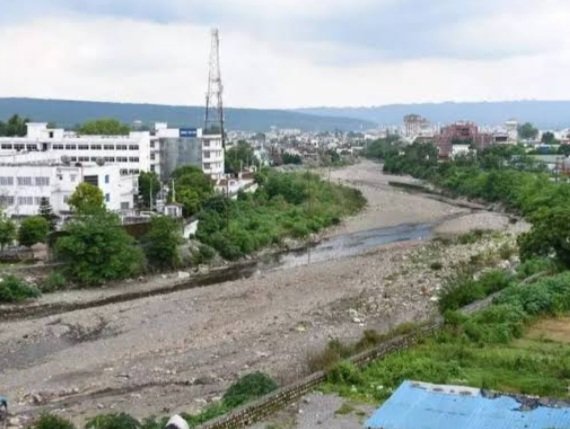
The proposed Rispana–Bindal Elevated Corridor (RBEC) will not solve Dehradun’s growing traffic problem. Instead, the city urgently needs better public transport and safe pedestrian infrastructure, said senior transport strategist Amit Baghel while addressing the second online Knowledge Series organised by the Dehradun Citizens Forum (DCF).
Baghel, speaking on “Sustainable Urban Mobility”, made it clear that elevated roads only shift congestion from one point to another. “Vehicles coming down from flyovers and expressways inevitably choke entry and exit points. No city has been able to manage this bottleneck,” he said, calling it a global pattern.
He explained that people don’t choose their mode of transport by choice alone. “It is the city’s infrastructure that decides. If roads are wide and car-friendly, people will drive.
If footpaths and public transport are reliable, people will walk or take buses,” Baghel noted. He warned that building wider roads only invites more vehicles — a phenomenon known as “induced demand”.
Questioning the logic of building an elevated corridor over rivers, Baghel said such projects make sense only for industrial transport, not daily city traffic.
“For general commuting, elevated roads will not reduce congestion. They damage local roads, footpaths and residential neighbourhoods,” he added.
Walk More, Drive Less
Baghel stressed that the first priority for Dehradun should be proper footpaths. “People are forced to use vehicles even for short distances because walking is unsafe and inconvenient,” he said, adding that walkable streets are healthier and environmentally friendly.
He also flagged the abysmal share of public transport in Indian cities, which stands at just 6%.
“With comfortable, reliable services and public awareness, this number can go up significantly,” he said. While suggesting higher charges for private vehicles, he admitted governments hesitate due to pressure from the automobile sector.
Metro Not Suitable for Dehradun
Referring to Dehradun’s short travel distances, Baghel ruled out metro-style systems for the city.
He cited the Comprehensive Mobility Plan prepared in 2019 and updated in 2024, covering Dehradun, Vikasnagar, Rishikesh and Haridwar over 3,668 sq km.
“The plan has several good recommendations, but the real test is implementation,” he said.
Demand for Transparency
Baghel demanded full disclosure if the RBEC project is going ahead. “Citizens must be told about its environmental and social impact.
This project will permanently change Dehradun’s skyline and ecology,” he warned.
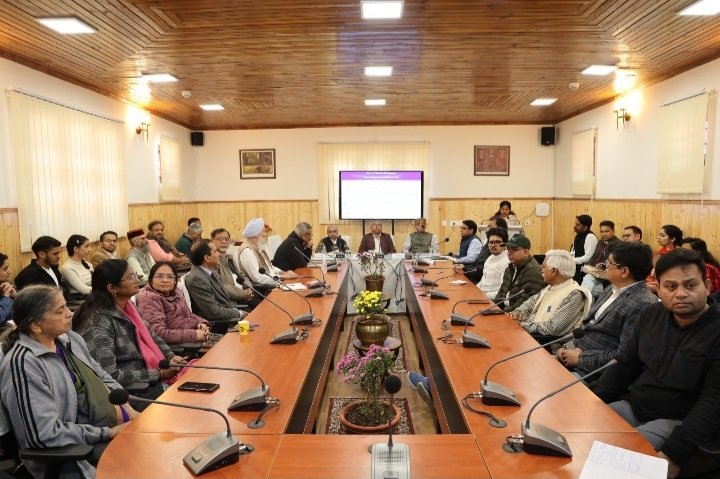
The session was moderated by Retu Chatterjee, with Bharti Jain presenting a summary. Social activist Anoop Nautiyal announced that the Knowledge Series will continue with more expert sessions.
Flood Risk Already Flagged
In the first session of the series, Pune-based river expert Sarang Yadwadkar had warned that the elevated corridor could obstruct river flow and raise flood risk in Dehradun. He had shared examples from Pune where river encroachments led to devastating floods.
Over 40 residents participated in the online discussion, reflecting growing public concern over the city’s future.
Bottom line: Experts are unanimous — flyovers won’t fix Dehradun’s traffic. The real solution lies in strong public transport and people-friendly streets.
#DehradunTraffic
#PublicTransportFirst
#WalkableCities
#SaveRispanaBindal