Shimla: Confronted with a deadly mix of rising traffic, human error and evening-hour congestion, the Himachal Pradesh Police has launched an intensive, data-driven road safety crackdown using the Electronic Detailed Accident Report (eDAR) system, turning accident data into what officials describe as a “digital shield” against fatalities.
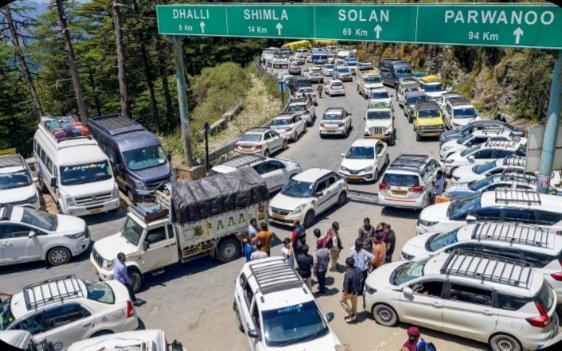
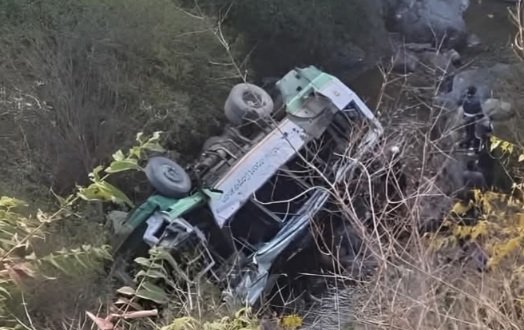
The move comes against the backdrop of 1,920 road accidents and nearly 800 deaths annually in the hill state, where narrow roads, blind curves and mixed traffic magnify the impact of even minor driving errors.
Data Exposes the Risk: Cars Lead, Bikers Suffer Most
eDAR analysis for 2025 shows cars, jeeps, vans and taxis as the biggest contributors, figuring as accused vehicles in 801 accidents, followed by two-wheelers (483 cases). Trucks and lorries accounted for 224 cases, buses for 71, and tempo/tractor-type vehicles for 58, taking the total number of accused vehicles to 1,785.
On the victim side, two-wheelers bore the heaviest toll with 485 cases, underlining their extreme vulnerability on hill roads. Cars and light vehicles followed with 349 victim cases, while trucks and lorries (93) and buses (47) also featured prominently.
Director General of Police Ashok Tewari said the data leaves little room for complacency.
“Modern technology is now the backbone of effective policing. With eDAR, we are not merely recording accidents—we are predicting patterns, identifying black spots and deploying manpower where it can save lives. We have adopted zero tolerance towards traffic violations,” the DGP said.
Evening ‘Danger Window’ Under the Scanner
Time-wise analysis has been central to the new strategy. While the lowest accident count—just 19 cases—was recorded between 3 am and 4 am, numbers rise steadily after 8 am and peak sharply in the evening.
The most accident-prone hour was 7 pm to 8 pm with 148 accidents, followed by 6 pm to 7 pm and 3 pm to 4 pm with 118 cases each, and 8 pm to 9 pm with 123 accidents. Though numbers taper after 9 pm, they remain significant till midnight.
Inspector General Gurdev Sharma, who oversees Traffic, Tourist and Railway policing, said this pattern has reshaped deployment strategy.
“Scientific data analysis has clearly identified 6 pm to 9 pm as the critical danger window. Fatigue, fading visibility and traffic rush converge during these hours. We have intensified patrols, interceptors and checkpoints on highways and tourist routes during this period,” he said.
Human Error Dominates, Data Gaps Worry Police
Violation-wise analysis reveals that human behaviour remains the single biggest cause of crashes. Rash driving accounted for 428 accidents, over-speeding for 359, dangerous overtaking for 110, and careless lane changing for 83 cases.
However, the most alarming figure is administrative: 979 accidents were recorded with ‘no violation marked’, raising concerns about investigation quality and enforcement feedback.
Addl. SP Narvir Singh Rathour, a road accident investigator, said eDAR is correcting this systemic weakness.
> “The eDAR portal bridges the gap between the accident site and the justice system. It ensures transparency, fixes accountability and converts digital data into real-world relief—medical aid, insurance and legal closure—without years of manual delay,” he said.
Why eDAR Matters Beyond Policing
Police officials stress that eDAR is not just an enforcement tool but a public safety lifeline. Digital reporting is now mandatory for accessing key benefits: ₹1.5 lakh cashless treatment for victims, fast-tracked MACT insurance claims, and ‘Rah-Veer’ rewards and legal protection for Good Samaritans who assist accident victims.
The initiative also fulfils the Supreme Court’s mandate in S. Rajaseekaran vs Union of India, which recognised technology-based accident management as integral to protecting the citizen’s Right to Life.
Enforcement Heatmap Rolled Out
Based on eDAR insights, HP Police has rolled out a targeted action plan: peak-hour policing between 6 pm and 9 pm, deployment of speed cameras and alco-sensors, removal of illegal roadside parking, and installation of high-visibility signage on sharp mountain curves.
Officials say the message is clear and uncompromising:
“Alert Today, Alive Tomorrow.”
“Speed Thrills, but Kills.”
“Drive Slow—Mountains Do Not Forgive Mistakes.”
As Himachal Pradesh turns data into deterrence, police officials say success will depend not just on technology or enforcement, but on whether drivers choose caution over haste—especially during the state’s deadliest evening hours.
#RoadSafety
#eDAR
#HPPolice
#SaveLives