
Shimla | Exclusive
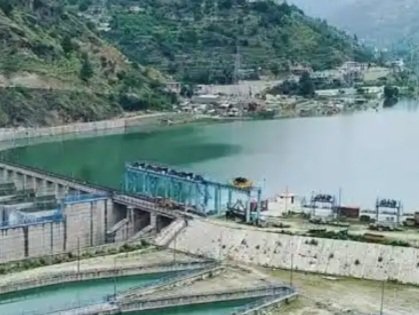
Staring at a sudden and severe financial squeeze after the Centre stopped the Revenue Deficit Grant (RDG), the Himachal Pradesh government has moved to tax land acquired by hydropower projects.
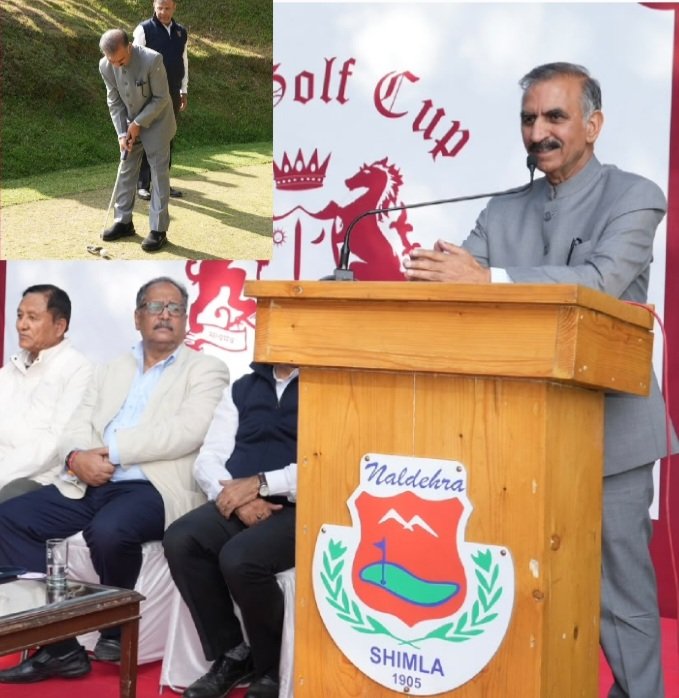
Chief Minister Sukhvinder Singh Sukhu today revealed that the government has decided in interest of Himachal to charge land revenue from Hydropower companies in the state.
The decision applies across the board—to central PSUs, state utilities and private developers alike. It marks the first major revenue intervention by the Sukhu government amid a deepening fiscal crisis.
All hydropower projects in Himachal, whether run by SJVN, NHPC, NTPC, HPSEBL or private companies, will now be charged land revenue. The levy covers micro, mini and mega projects spread across fragile river valleys. Officials say the step is unavoidable, though the government has not disclosed expected revenue figures.
The move follows the Centre’s decision to stop RDG support worth nearly ₹48,000 crore over five years.
This grant had been cushioning Himachal’s post-GST finances. Its withdrawal has exposed the structural weakness of hill-state economics.
Himachal’s troubles are compounded by the GST regime, which rewards large consumer markets. With a population of just about 70 lakh, the hill state simply cannot compete with plains states in consumption-based taxation.
As a result, GST yields remain low despite high national contributions.
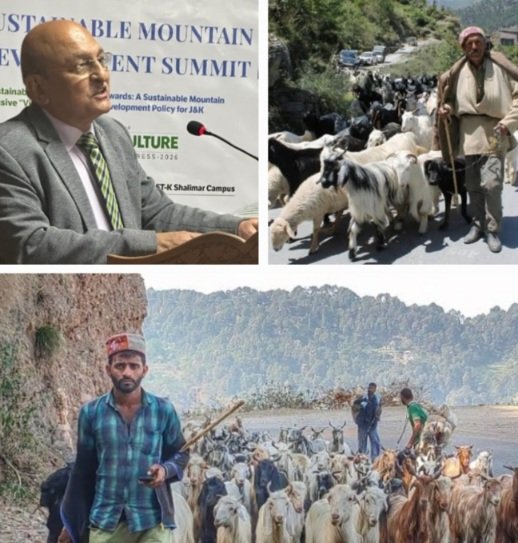
The same structural penalty applies to other Himalayan states. Uttarakhand, Jammu & Kashmir, Ladakh, Sikkim and northeastern hill states face identical constraints. Yet policy corrections for hill geographies remain absent.
Critics argue this goes against the spirit of cooperative federalism. Himalayan states were not created as profit centres. They were carved out to protect ecology, hill culture and strategic natural resources.
Himachal’s rivers power large parts of northern India. Its mountains regulate climate, store water and protect downstream states like Punjab, Haryana and Delhi. Yet the economic returns rarely flow back to the hills.
Despite being a major hydropower producer, Himachal earns little from the sector. Most large projects- tapped power of 12000 MW- belong to central PSUs or private firms. The state utility-HPSEBL controls only a small slice of installed capacity.
Free power royalties have failed to offset ecological and social costs. Displacement, damaged livelihoods and disaster risks remain with the state. Revenue, meanwhile, flows out.
The land revenue decision is being seen as the state’s first attempt to reclaim fiscal space. It also raises legal questions, as many projects were allotted land under older policy regimes. Industry pushback and litigation cannot be ruled out.
Himachal’s options have further shrunk as the Centre has not allowed a water cess. Water is one of the state’s most valuable natural assets. Yet the right to monetise it has been denied.
Equally critical is the forest question. Himachal earns virtually no revenue from its forest wealth because green felling is banned under working plans. By protecting forests, the state provides massive ecological services to the nation.
Its forests, water sources, hydrowpower projects and orchards act as major carbon sinks. They help India meet climate commitments and stabilise fragile ecosystems. Yet no green grant or compensation has been provided by the Centre.
The absence of climate compensation is glaring. Himachal faces repeated cloudbursts, landslides and floods with rising intensity. Disaster response costs have exploded over the past three years.
Small and marginal farmers remain the worst hit. With most land classified as forest, rehabilitation options are limited.
Despite Supreme Court directions to frame policy for the small and marginal farmers, alternative livelihoods remain elusive as of now as Himachal has limited revenue land as all wasteland is classified as forest land for the state needs to get FCA clearance from the MOEFCC.
Industrialisation has also delivered limited gains. Even with some of the cheapest electricity rates in the country, industries have clustered only in the Baddi-Barotiwala-Nalagarh belt. Employment and revenue benefits from this for the wider state remain opaque. No one knows how much Himachal youth have been employed in BBN and its contribution to the state treasury is not much.
Political analysts say the Centre is tightening Chief Minister Sukhu’s hands. With just two years in office, fiscal manoeuvring space is shrinking. Yet the problem will not end with this government.
The next government, whoever forms it, will face the same crisis in 2027–28. Structural issues in GST, RDG and climate compensation will persist. Pundits warn the delay only deepens the hole and crisis.
All eyes are now on the upcoming Himachal budget and all party MLAs meeting that CM has called after the Cabinet meeting. The government is expected to justify the hydropower land levy and outline its legal basis. It will also renew its demand for special treatment for Himalayan states.
For Himachal, dependent on apples, vegetables, tourism and hydropower, the message is clear. The state cannot continue "subsidising the nation" at its own cost. The ball is now in the Modi government’s court.
#HimalayaPaysIndiaProfits
#StopPenalisingHillStates
#HimachalFiscalCrisis
#GreenServicesNoGrant
#FederalismUnderStress