CHOPAL, MAY 31:
As the counting of votes for the Block Development Committee (BDC) and Zila Parishad elections began at Government Senior Secondary School on Sunday, the biggest loser was neither a candidate nor a political party. It was the school's playground—and the hundreds of children who depend on it.
What should have been a day celebrating grassroots democracy instead left behind a shocking trail of destruction.
Following overnight rain, the school ground had turned soft and waterlogged.
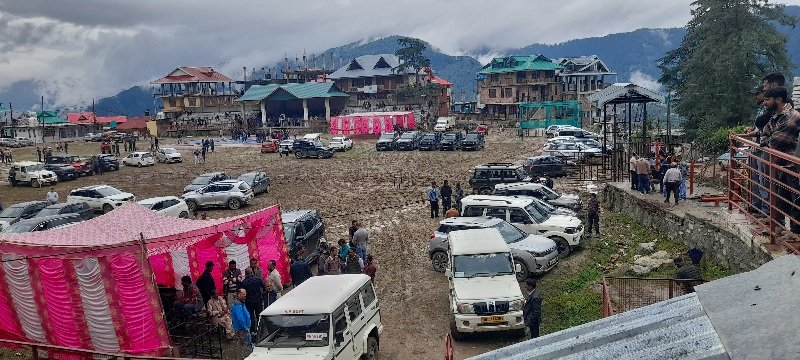
Yet hundreds of SUVs, cars and other vehicles carrying candidates, supporters, polling parties and agents and political workers were allowed to drive directly onto the playground.
By afternoon, the ground had been reduced to a muddy battlefield of tyre ruts, potholes and slush. The only open recreational space available to schoolchildren was transformed into an unwalkable quagmire.
The most disturbing aspect is that the damage was entirely avoidable.
The Election Commission and local administration should never have permitted such a merciless onslaught on a school playground.
Once rain had rendered the ground vulnerable, vehicle movement should have been stopped immediately.
Instead, officials watched as vehicle after vehicle rolled across the saturated surface, churning it into mud.
The episode raises uncomfortable questions.
Why must schools always bear the burden of elections?
Why could the counting not have been conducted in government offices, community centres, the SDM complex, Tehsil premises, rest houses or other public facilities?
Why are educational institutions repeatedly chosen as the easiest option, regardless of the cost to students and school infrastructure?
The problem extends far beyond polling and counting days.
Across Himachal Pradesh and much of the country, schools are routinely converted into polling stations, counting centres, training venues, election camps and political gathering points.
Election meetings, campaign rallies and public functions are often held on school premises, exposing educational institutions to crowds, vehicles and political activity.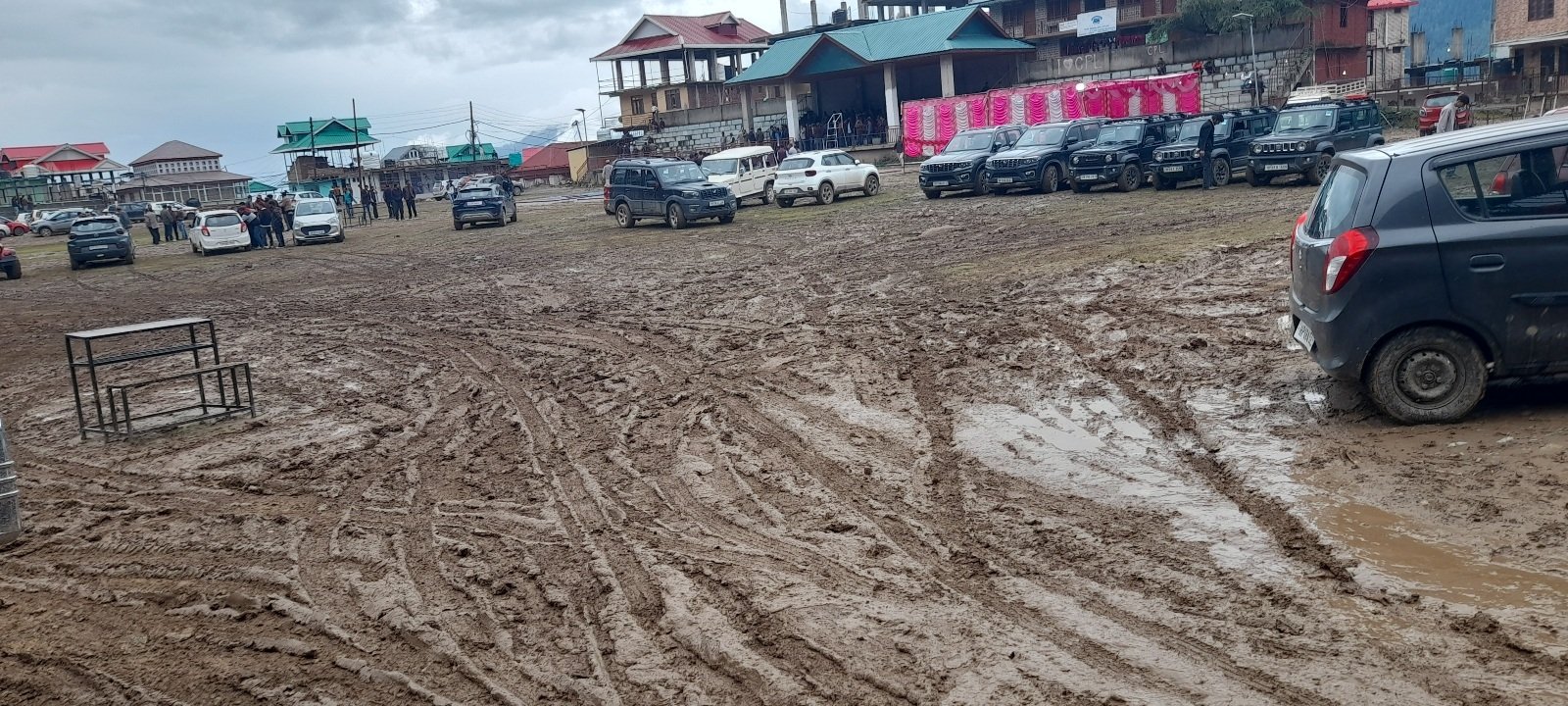
In the process, schools gradually lose their sanctity as spaces dedicated to learning and child development.
Children are taught that schools are temples of education. Yet time and again these temples are occupied, disrupted and damaged for administrative convenience. Classrooms become offices, playgrounds become parking lots and school campuses become extensions of the political battlefield.
The irony could not be more glaring.
Many of the vehicles that destroyed the govt sr secondary School ground belonged to aspiring public representatives who routinely speak about youth welfare, quality education and nation-building.
Yet few appeared concerned that their vehicles were reducing a children's playground into a sea of mud.
Pedestrians struggled to move through the packed campus as vehicles occupied every available space. The scene resembled a crowded political fair rather than an educational institution.
For many local residents, Sunday's spectacle reflected a deeper malaise—society's growing disregard for government schools. Public school infrastructure is often treated in a manner that would never be tolerated in administrative offices, VIP complexes or government residences.
The result is visible across the country. Schools are repeatedly desecrated by activities unrelated to education and are expected to quietly absorb the damage. Once the election machinery departs, students are left to deal with broken infrastructure, littered campuses and damaged playgrounds.
At Sr Sec School Chopal, democracy has left its footprint quite literally—in deep tyre marks carved into a playground that may remain unusable for days or weeks.
As victorious candidates celebrate and election officials prepare their reports, schoolchildren will return to a ground scarred by the very system that claims to be working for their future.
The image of luxury SUVs sinking into a rain-soaked playground may well become the defining symbol of the day—a stark reminder that while politicians often invoke children as the future of the nation, protecting the spaces meant for those children remains an afterthought.
If a school playground cannot be safeguarded from the machinery of elections, it is fair to ask whether our priorities have become hopelessly misplaced.
Will election commission of India take note?
Will Chief Justice of Supreme or High Court wake up and set thing right, Preserving and Protecting the sanctity of our schools ?