Shimla: Facing sustained heat from the Opposition, Chief Minister Sukhvinder Singh Sukhu on Saturday indicated that the alleged irregularities under the Himcare scheme could turn out to be the “biggest scam” yet, even as serious concerns mount over selective disclosure of data by both the ruling Congress and the Opposition.
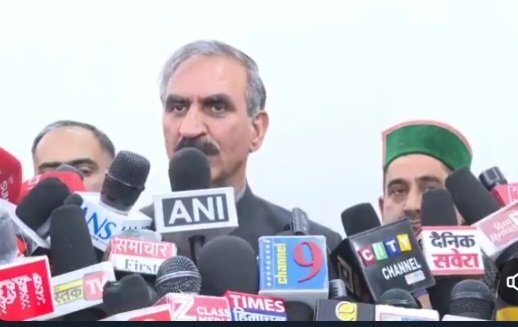
Speaking to the media, Sukhu said an internal report has flagged a suspected scam of ₹110–120 crore, so far limited to Indira Gandhi Medical College and Hospital (IGMC) and Dr. Rajendra Prasad Government Medical College.
He questioned the volume of claims, remarking that “so many people could not have been sick” to justify the payments already made.
The Chief Minister also revealed that around ₹450 crore in payments to private hospitals remain pending, with additional dues under various treatment packages yet to be cleared. A vigilance probe has already been ordered.
However, the political slugfest has exposed serious transparency gaps. While the Opposition, led by former Chief Minister Jai Ram Thakur, has been attacking the government, both Sukhu and Thakur are being seen as selective in sharing data—putting out figures that suit their narratives while withholding crucial details.
Questions that remain unanswered:
Whether private hospitals were fully empanelled under Himcare or if the scheme largely relied on government institutions
The exact number of patients treated in private hospitals versus government hospitals
A clear breakup of payments made and pending across sectors
Notably, the Chief Minister did not disclose the total beneficiary split between private and government hospitals, a critical metric to understand the scale of the alleged fraud.
Amid the growing controversy, voices are now calling for a probe monitored by a sitting judge of the High Court to bring out the full truth behind Himcare.
Experts and observers underline that Himcare remains a crucial health safety net for people not covered under Ayushman Bharat.
“The intent of the scheme is sound and it has benefited the common man over the past seven years. The focus should be on plugging loopholes and fixing accountability—not scrapping it altogether,” they argue.
There is also increasing pressure on the Sukhu government to identify and act against scamsters and erring hospitals, ensuring strict accountability rather than allowing the issue to devolve into a political blame game.
Critics point out that allowing such irregularities to fester in a scheme operational for seven years does not reflect well on governance.
“This is the time to clean the system, not kill it,” voices from within the policy and healthcare space suggest.
With a vigilance inquiry underway and calls for judicial oversight growing louder, the coming days could prove decisive in determining whether the government delivers transparency and justice—or whether Himcare becomes another casualty of politics.