
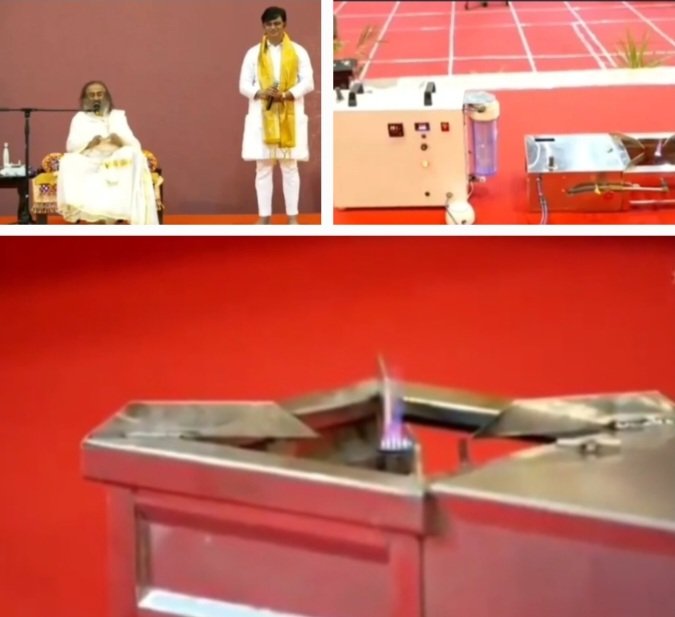
SHIMLA: A viral demonstration of a so-called “hydrogen stove” has set off a heated debate across India after it was presented to Art of Living Guru, Sri Sri Ravi Shankar, with growing calls for PMO India to examine the claims.
Touted as a low-cost, clean cooking alternative, the device claims to generate hydrogen fuel by splitting water through electrolysis, offering what is being described as a near zero-emission solution for household kitchens.
With a claimed price tag of ₹2,000–₹3,000, it is being projected as a potential relief for families struggling with rising LPG costs.
However, the person demonstrating the device remains unidentified in any verified scientific or institutional context.
While a name—Mahesh Shinde—has surfaced on social media, there is no confirmed link to any recognised research or validated invention.
LPG Crunch Pushes Alternative Ideas Into Spotlight
The timing of the viral video has amplified its reach. The stove has quickly become a talking point amid the ongoing LPG crisis in India, triggered by tensions involving the United States, Israel, and Iran that have disrupted global energy supplies.
With LPG becoming costlier and supply chains under stress, households and small businesses are increasingly looking at cheaper and more reliable alternatives, giving such innovations instant public traction.
Science vs Hype
Even as curiosity grows, the scientific community has largely stayed cautious.
Experts point out that that Electrolysis demands substantial electrical energy, often more than what the resulting hydrogen can deliver for cooking. Small quantities of hydrogen translate into very limited cooking time.
Hydrogen’s highly combustible nature raises serious safety concerns in domestic settings
Many argue that while the concept is scientifically sound, the real challenge lies in efficiency, safety, and scalability.
Himachal’s Hydrogen Push, But Stove Still a Question
Amid this backdrop, Himachal Pradesh is moving ahead with plans to establish hydrogen production facilities as part of its clean energy roadmap.
Yet, the viral stove remains a grey area for domestic use. Experts stress that only rigorous R&D, safety testing, and real-world trials can determine whether such a device can move from demonstration to dependable kitchen technology.
Old Idea, New Debate
Scientists and engineers note that splitting water into hydrogen is centuries-old science, not a breakthrough in itself. The real test is whether this version can meet the benchmarks of Safety, Affordability, Reliability
Without that, it risks remaining more of a conceptual showcase than a practical solution.
The hydrogen stove has captured public imagination at a time of energy uncertainty, but questions far outweigh answers.
Until it undergoes proper scientific validation and regulatory scrutiny, it remains an intriguing claim—not yet a proven alternative for everyday cooking.
But Truth is established by evidence, not claims alone, says Bhagavad Gita.