New Delhi/Shimla/Srinagar:
As the West Asia crisis sharpens with Iran restricting access to the Strait of Hormuz and the United States signalling possible naval escorts for commercial shipping, India has moved swiftly on the diplomatic and strategic front—backing Gulf sovereignty, calling for de-escalation, and placing the safety of Indians and energy security at the centre of its response.
Prime Minister Narendra Modi held high-level conversations with key Gulf leaders amid growing uncertainty over maritime security and regional stability.
In a call with King Abdullah II, Modi conveyed India’s deep concern over the evolving situation and reaffirmed support for peace, security and the well-being of the people of Jordan.
He also thanked the Jordanian leadership for ensuring the safety of the Indian community during what he described as a difficult period.
Modi also spoke with Sheikh Tamim bin Hamad Al Thani, strongly condemning any violation of Qatar’s sovereignty and territorial integrity.
Stressing the urgent need to restore peace through dialogue and diplomacy, the Prime Minister expressed appreciation for Qatar’s continued support and care for the Indian diaspora.
Hormuz Tensions and Global Fallout
The diplomatic push follows Iran’s declaration that only Chinese vessels would be allowed passage through the Strait of Hormuz, warning that all other ships would be treated as hostile. According to reports over 10 tankers were attacked by Irani forces while crossing the Strait for the last 24 hours.
The move has sent shockwaves through global energy markets, as the strait remains one of the world’s most critical maritime chokepoints.
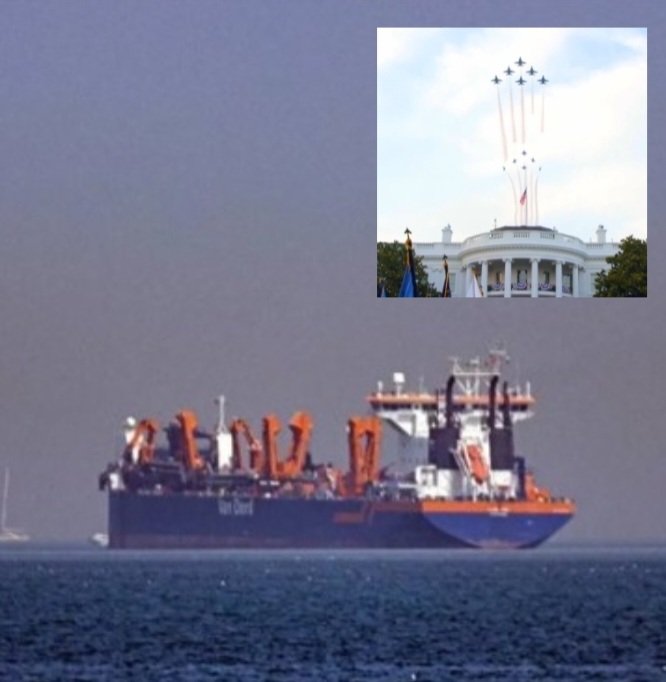
Reacting sharply, Donald J. Trump announced that the United States Development Finance Corporation would provide political risk insurance and guarantees for maritime trade and said the US Navy could begin escorting tankers through the strait if required.
Trump also claimed Iran’s naval, air and radar capabilities had been “knocked out,” signalling a further hardening of positions.
Global diplomatic activity has intensified alongside the military rhetoric. Trump also met Friedrich Merz at the White House, underscoring close coordination among Western allies as the crisis unfolds.
Commentung on the present turmoil in the Middle East and Gulf, Brahma Chellaney, the strategic Affairs Expert said that a strategic windfall for the United States has emerged: The Trump-Netanyahu war on Iran has disrupted Middle Eastern oil and LNG exports. But, amid surging global energy prices, one country is making a killing — the U.S.
Already the world’s largest LNG exporter, the U.S. also produces more oil than Saudi Arabia and Russia combined.
With no Strait of Hormuz bottleneck threatening its shipments, American energy exporters are reaping windfall profits.
With Qatari production halted and other Middle Eastern supplies disrupted, LNG prices have surged to multi-year highs. Spot prices in Asia have doubled, while European gas prices have jumped more than 40%.
The result is a striking geopolitical irony: a war that destabilizes Middle Eastern energy supplies is strengthening the global market position of the U.S.
"Few wars so neatly reward the very power leading the armed conflict", he observed.
Within India, political reactions have surfaced as well. Peoples Democratic Party leader Mehbooba Mufti criticised US and Israeli actions, even as protests were reported in parts of Kashmir, reflecting how the conflict is resonating domestically.
Why Hormuz Matters for India
For India, the Strait of Hormuz is not a distant geopolitical flashpoint but a vital economic lifeline. Nearly two-thirds of India’s crude oil imports and a significant share of its liquefied natural gas supplies pass through this narrow corridor linking the Persian Gulf to global markets.
Any prolonged disruption threatens India’s energy security, fuel prices, inflation and growth outlook.
Major suppliers—including Saudi Arabia, Iraq, Kuwait, the UAE and Qatar—depend on Hormuz to ship oil and gas to India.
Beyond energy, the route underpins India’s wider trade with West Asia and the Gulf, a region that also hosts over eight million Indians, whose remittances form a key pillar of the Indian economy.
How India Is Managing the Risk
Against this backdrop, New Delhi is adopting a calibrated, multi-layered approach.
Diplomatically, India is engaging regional partners while firmly supporting the sovereignty and territorial integrity of Gulf nations and consistently calling for restraint and dialogue.
Officials said India is avoiding military alignment while working to keep communication channels open across the region.
On the energy front, India has diversified crude sourcing over recent years and maintains strategic petroleum reserves to sail through the short-term supply shocks.
Alternative suppliers and shipping routes are being kept ready should Hormuz face sustained disruption.
From a maritime security perspective, the Indian Navy has stepped up vigilance in the Arabian Sea and remains prepared to assist Indian-flagged vessels if the situation deteriorates, in coordination with friendly navies.
The Ministry of External Affairs, officials said, is in constant touch with Indian missions across West Asia and the Gulf, monitoring developments closely and ensuring preparedness to safeguard Indian nationals if required.
As tensions rise and diplomacy hardens, India’s approach reflects strategic caution—prioritising peace, protecting energy lifelines, and ensuring the safety of millions of Indians abroad, while steering clear of the widening military confrontation gripping West Asia.