Shimla, April 21: A two-day national workshop on the preservation of ancient scripts and manuscripts began on Monday at the Indian Institute of Advanced Study, located at the historic Rashtrapati Niwas.
Titled “Heritage of Ancient Writing Traditions in the Western Himalaya—Preservation of Himachal’s Scripts and Manuscripts,” the workshop, being held from April 21–22, is bringing together scholars and experts to deliberate on conservation, reading, digitisation, and documentation of rare manuscript traditions.
The initiative aims to promote the study and preservation of scripts that evolved in the Western Himalayan region, particularly in Himachal Pradesh.
These include Sharada-derived scripts such as Tankri, Pabuchi, Pandvani, and Chandvani, which are repositories of India’s knowledge systems.
Many of these manuscripts contain valuable material related to Vedas, Puranas, astrology, and Ayurveda, making them crucial for research and cultural continuity.
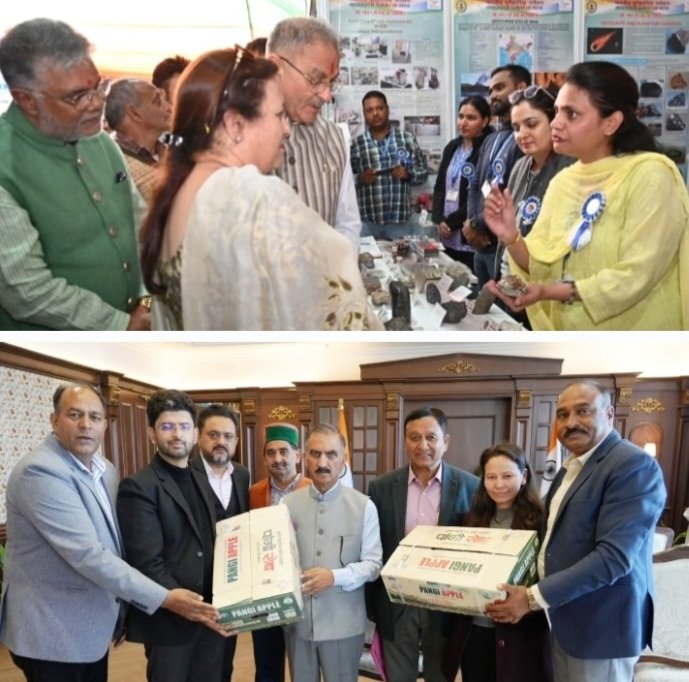
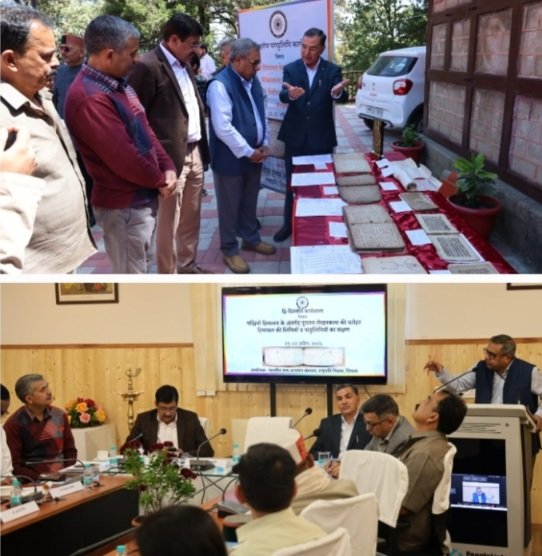
The inaugural session opened with the launch of an exhibition showcasing rare manuscripts, offering a glimpse into the region’s rich writing traditions.
Workshop convener Prof. Om Prakash Sharma outlined the objectives, stressing that manuscripts preserved in the Himalayan belt are an invaluable part of India’s intellectual heritage and require urgent conservation.
Delivering the keynote address, noted scholar Prof. R.C. Sinha elaborated on the relevance of manuscripts, highlighting their preservation and the diverse dimensions of ancient writing traditions.
Chief guest Prof. Himanshu Kumar Chaturvedi underlined that manuscripts are not merely historical records but living expressions of India’s intellectual legacy.
He called for coordinated institutional efforts for their preservation, digitisation, and scientific study, reaffirming the institute’s commitment to the cause.
Chairing the session, Prof. Devdatt Sharma emphasised the importance of studying ancient scripts for a deeper understanding of India’s history and culture, urging young researchers to take up work in this field.
The session concluded with a vote of thanks by institute secretary Mehr Chand Negi, while the proceedings were conducted by PRO Dr. Akhilesh Pathak.
Further sessions over the next two days will feature expert lectures and panel discussions focusing on manuscript preservation techniques, script studies, technical aspects, and regional traditions.