SHIMLA/NARKANDA:
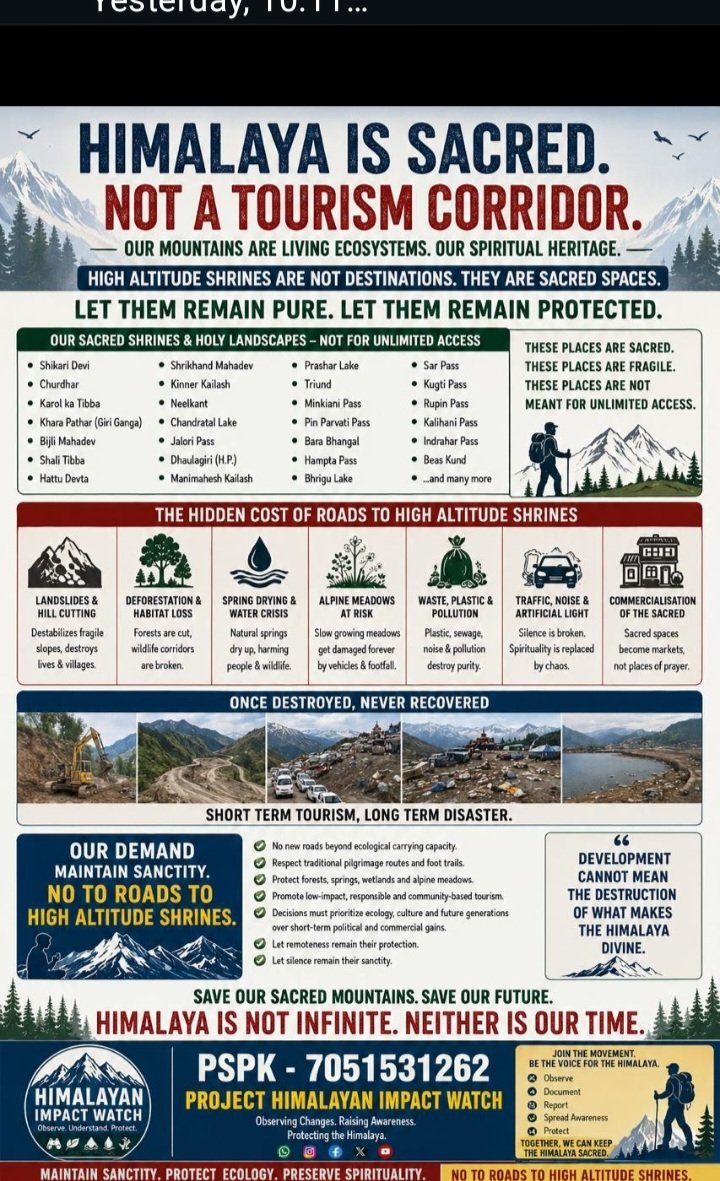
As environmental groups continue to warn against indiscriminate hill cutting, tunnelling and highway expansion across Himachal Pradesh, the State Government's announcement that the survey for the proposed Dhalli-Narkanda-Rampur four-lane highway has been completed has reignited a familiar debate: can the fragile Himalayas withstand another mega infrastructure project?
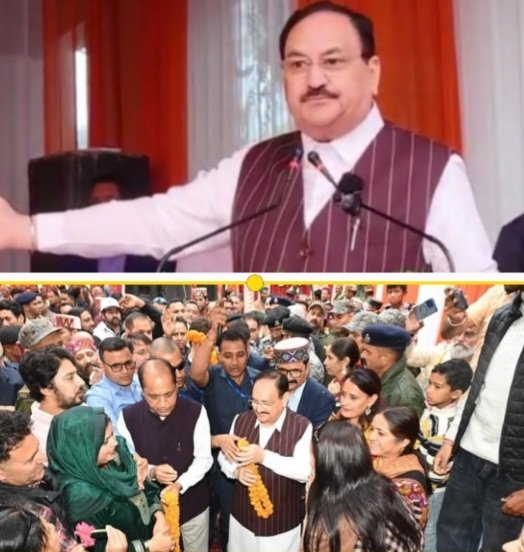
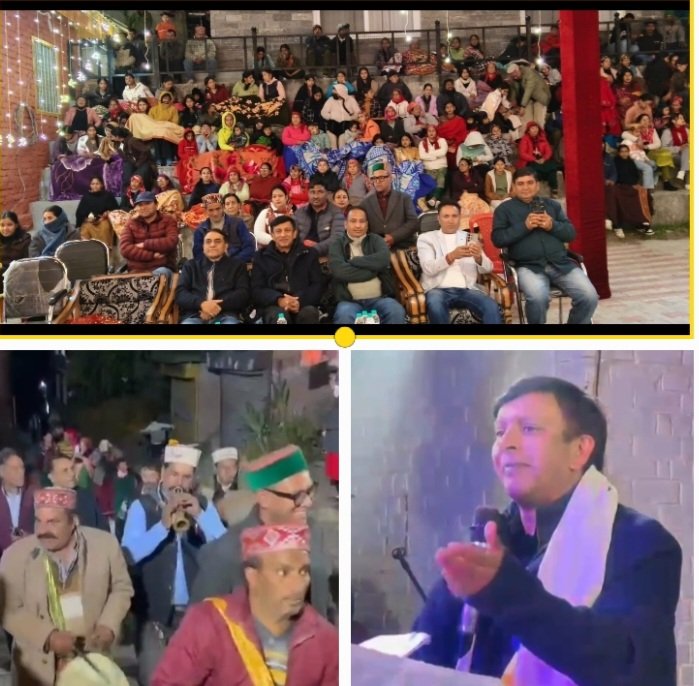
Chief Minister Thakur Sukhvinder Singh Sukhu made the announcement on Saturday after offering prayers at Hatu Mata Temple in Narkanda. In the presence of Theog MLA Kuldeep Singh Rathore and local representatives, the Chief Minister said the project would prioritize tunnel construction to reduce landslide risks and ensure safer travel on the busy NH-5 corridor.
The proposed four-lane highway is being projected as a solution to one of Himachal Pradesh's most persistent traffic nightmares.
The existing Shimla-Theog-Narkanda highway has become a major bottleneck, particularly during the summer tourist season when thousands of vehicles crawl through the congested Dhalli-Sanjauli-Kufri stretch. Weekend traffic jams often leave tourists and local commuters stranded for hours.
The situation worsens during the apple season when trucks, pickups and transport vehicles carrying fruit from the Upper Shimla apple belt converge on the highway.
Traffic volumes multiply several times over, and long queues of vehicles heading towards Dhalli market have become a routine sight. For apple growers, traders and transporters, delays on the route translate directly into economic losses.
The tourism industry has largely welcomed the proposed four-laning. Hotel owners and tourism stakeholders believe that improved connectivity will significantly reduce travel time to Narkanda, Kotgarh, Rampur and Kinnaur, making these destinations more accessible and boosting visitor numbers.
However, not everyone is convinced. Some traders and residents fear that extensive tunnelling and high-speed corridors could bypass traditional roadside markets that currently depend on passing tourist traffic. They worry that visitors travelling rapidly through tunnels may proceed directly towards Rampur and Kinnaur without stopping in local bazaars, depriving smaller towns of an important source of income.
Beyond economics, the project is also raising serious environmental concerns.
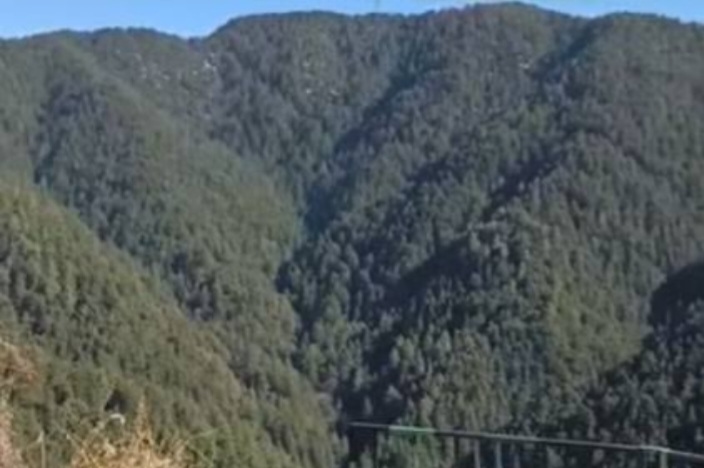
One of the most sensitive stretches lies between Dhalli and Charabra, where the proposed corridor passes through dense deodar forests and near the eco-sensitive zone of the Shimla Water Catchment Wildlife Sanctuary.
This forested landscape is far more than a tourist attraction. It serves as a critical watershed and the source of numerous springs feeding Shimla's historic gravity-based water supply system developed during the British era.
For more than a century, these forests have acted as a natural sponge, recharging water sources that sustained the hill capital long before modern pumping schemes came into existence. Environmentalists warn that large-scale excavation, tunnelling and road construction could alter underground hydrology, disrupt spring recharge zones and affect the long-term health of water catchments that remain vital to Shimla's water security.
Conservationists are therefore asking a crucial question: will the four-lane project bypass these fragile forests through carefully designed tunnels, or will authorities seek forest diversion through one of the state's most valuable deodar belts? The answer could determine whether the project minimizes ecological damage or triggers another round of large-scale forest loss and habitat fragmentation.
The issue assumes added significance because the National Highways Authority of India (NHAI) and the Ministry of Road Transport and Highways are yet to secure the necessary forest diversion approvals from the Forest Advisory Committee of the Ministry of Environment, Forest and Climate Change.
NHAI has not finalized the alignment of the project including where and how many tunnels the highway will have.
Until these statutory clearances are obtained, questions remain about the final alignment, the extent of tunnelling, the number of trees likely to be affected and the cumulative environmental impact of the project.
Environmental groups point out that Himachal Pradesh has already witnessed significant ecological damage from several ongoing highway expansion projects, where slope failures, muck dumping, forest degradation and increased landslide vulnerability have become recurring concerns.
The Houses have collapsed and cracks are wide open in the Solan Kathlighat- Dhalli section of the Shimla Kalka Four-lane project.
They argue that the lessons from those projects must inform future planning before another major highway is pushed through a geologically young and unstable mountain system.
During his visit to Narkanda, the Chief Minister also announced that the long-pending Hatu Mata Ropeway project has been proposed under NABARD funding and would be taken up on priority. He said funds had been sanctioned for improving the Hatu Mata road while ensuring that tree felling is minimized.
Sukhu also announced a grant of Rs. 50 lakh for the unopposed Narkanda Nagar Panchayat and planted a sapling during the visit.
As the Dhalli-Narkanda-Rampur four-lane project moves from survey to implementation, it encapsulates the dilemma confronting the Himalayan states today.
There is a demand for faster mobility, safer roads and economic growth on one hand, and the need to protect forests, water sources and fragile mountain ecosystems on the other.